What are amino acids and why are they important for horses?
You may have heard about amino acids and their importance for your equine companion. But what exactly are amino acids and why are they essential for horses? Amino acids are the building blocks of proteins, which are crucial for many bodily functions such as muscle growth and repair, immune system support, and hormone production. There are 20 different types of amino acids, 10 of which are considered essential for horses as they cannot be produced by the body and must be obtained through their diet. These essential amino acids include lysine, methionine, threonine, tryptophan, histidine, leucine, isoleucine, valine, phenylalanine, and arginine. Each of these amino acids has a specific role in maintaining your horse’s health.
As a horse owner, it’s essential to understand the importance of amino acids in your horse’s diet. Amino acids are the building blocks of proteins, which are essential for muscle development, tissue repair, and overall health. While horses can produce some amino acids on their own, others must come from their diet.
Here are the top 10 amino acids for horses that you should know about.
1. Lysine
Lysine is an essential amino acid that plays a critical role in muscle development and immune system function. Horses require a steady supply of lysine in their diet to maintain their health and well-being.
2. Methionine
Methionine is another essential amino acid that is crucial for healthy hooves, skin, and coats. It also helps with the production of keratin, which is essential for strong and healthy hair and hooves.
3. Threonine
Threonine is an essential amino acid that plays a critical role in the development and maintenance of muscle mass. It also aids in the production of antibodies, which are essential for a healthy immune system.
4. Tryptophan
Tryptophan is an essential amino acid that is necessary for the production of serotonin, a neurotransmitter that helps regulate mood and behavior. It also helps with the development and maintenance of healthy muscle tissue.
5. Arginine
Arginine is a non-essential amino acid that plays a critical role in the production of nitric oxide, which helps to regulate blood flow and improve circulation. It is also essential for healthy immune system function.
6. Histidine
Histidine is an essential amino acid that plays a crucial role in the production of red and white blood cells. It is also necessary for the production of histamine, which is essential for healthy immune system function.
7. Valine
Valine is an essential amino acid that is necessary for the development and maintenance of healthy muscle tissue. It also helps with the production of energy and the regulation of blood sugar levels.
8. Leucine
Leucine is an essential amino acid that plays a crucial role in the development and maintenance of healthy muscle tissue. It also aids in the production of energy and the regulation of blood sugar levels.
9. Isoleucine
Isoleucine is an essential amino acid that is necessary for the development and maintenance of healthy muscle tissue. It also aids in the production of energy and the regulation of blood sugar levels.
10. Phenylalanine
Phenylalanine is an essential amino acid that is necessary for the production of neurotransmitters, which are essential for healthy brain function. It also aids in the production of energy and the regulation of blood sugar levels.
In conclusion, these are the top 10 amino acids for horses that you should know about. A balanced diet that includes these amino acids in the appropriate amounts is crucial for your horse’s overall health and well-being. Consult with your veterinarian or equine nutritionist to ensure that your horse is getting the right amount of amino acids in their diet.
How to choose the right amino acid supplement for your horse?
As a horse owner, you want to ensure that your equine friend is receiving the best possible care and nutrition. One way to achieve this is by providing them with amino acid supplements. Amino acids are the building blocks of protein and are essential for the growth and repair of tissue in horses.
However, with so many amino acid supplements available on the market, it can be challenging to choose the right one for your horse. Here are some factors to consider when selecting an amino acid supplement:
1. The type of amino acids
There are two types of amino acids: essential and non-essential. Essential amino acids cannot be produced by the body and must be obtained through the diet. Non-essential amino acids can be produced by the body. Ensure that the supplement you choose contains the essential amino acids that your horse requires.
2. The quality of the ingredients
The quality of the ingredients in the supplement is crucial. Look for a supplement that contains high-quality, bioavailable ingredients that are easily absorbed by the horse’s body. Avoid supplements that contain fillers or artificial additives.
3. The form of the supplement
Amino acid supplements come in various forms, including pellets, powders, and liquids. Choose a form that is convenient for you to administer and that your horse will readily accept.
4. The dosage
The dosage of the supplement will depend on the horse’s weight, age, and activity level. Follow the manufacturer’s instructions for dosage and consult with your veterinarian if you are unsure.
5. The reputation of the manufacturer
Choose a supplement from a reputable manufacturer that has a history of producing high-quality products. Look for reviews and feedback from other horse owners to ensure that the supplement has been effective for their horses.
In conclusion, choosing the right amino acid supplement for your horse requires careful consideration. Consider the type of amino acids, quality of ingredients, form of the supplement, dosage, and reputation of the manufacturer. By taking these factors into account, you can provide your horse with the best possible care and nutrition.

What is the impact of Amino acids on horse Coat and hoof health?
One of the most important amino acids for coat health is methionine. Methionine is an essential amino acid, meaning that horses cannot produce it themselves and must obtain it from their diet. Methionine is a key component in the production of keratin, which is the protein that makes up the majority of a horse’s hair and hooves. Without sufficient methionine, horses may experience dry, brittle hair and weak, cracked hooves. Another important amino acid for coat health is lysine. Like methionine, lysine is an essential amino acid that horses must obtain from their diet. Lysine plays a key role in the production of collagen, which is a protein that gives skin and hair their elasticity. Horses that are deficient in lysine may experience dry, dull hair and skin. In addition to methionine and lysine, there are several other amino acids that play a role in maintaining a healthy coat and hooves. These include cysteine, arginine, and tyrosine.
Can I add amino acids to senior horse diets?
As horses age, their dietary needs change. Senior horses require a well-balanced diet that supports their aging bodies and helps them maintain good health. One essential component of a senior horse’s diet is amino acids.
With time senior horses’ ability to digest and absorb nutrients decreases. This can lead to a deficiency in essential amino acids, which can have negative effects on their health. For example, a deficiency in lysine, an essential amino acid, can lead to muscle wasting and a weakened immune system. To ensure that senior horses are getting the necessary amino acids in their diets, it’s important to provide them with high-quality protein sources. Good sources of protein for senior horses include alfalfa, soybean meal, and whey protein.
It’s also important to provide senior horses with a well-balanced diet that contains all of the essential amino acids. This can be achieved through the use of high-quality senior horse feed or by working with a veterinarian or equine nutritionist to develop a custom diet plan.
In conclusion, amino acids play a crucial role in the health and well-being of senior horses. Ensuring that they are getting the necessary amino acids in their diets can help them maintain muscle mass, support their immune system, and improve their overall health. By providing high-quality protein sources and a well-balanced diet, we can help our senior horses live happy, healthy lives.
The benefits of feeding horses amino acids during training and competition
As an equestrian athlete, you want to give your horse the best possible nutrition to help them perform at their peak. One area that is often overlooked is the importance of amino acids in a horse’s diet.
Amino acids are the building blocks of protein, which is essential for muscle growth and repair. When horses are in training and competition, their muscles undergo a lot of stress which can result in muscle damage. Feeding your horse amino acids can help to repair and rebuild these muscles, allowing them to recover faster and perform better.
There are two types of amino acids: essential and non-essential. Essential amino acids cannot be produced by the horse’s body and must be obtained through their diet. Non-essential amino acids can be produced by the body, but supplementing them can still be beneficial.
Some of the key benefits of feeding your horse amino acids during training and competition include:
1. Improved muscle recovery: Amino acids can help to repair and rebuild muscles that have been damaged during exercise, allowing your horse to recover faster and perform better.
2. Increased muscle mass: Amino acids are essential for muscle growth, so feeding your horse the right combination of amino acids can help them to build more muscle mass.
3. Improved performance: By supporting muscle recovery and growth, amino acids can help your horse to perform at its best during training and competition.
4. Reduced risk of injury: Strong, healthy muscles are less likely to be injured, so feeding your horse amino acids can help to reduce their risk of injury.
5. Better overall health: Amino acids are essential for many other bodily functions, such as immune system function, hormone production, and nutrient absorption. By ensuring your horse gets enough amino acids, you can help to support their overall health and well-being.
In conclusion, feeding your horse amino acids during training and competition can have a range of benefits for their muscle recovery, growth, and overall health. By working with a qualified equine nutritionist, you can ensure that your horse’s diet is properly balanced and includes the right combination of amino acids to support their athletic performance.
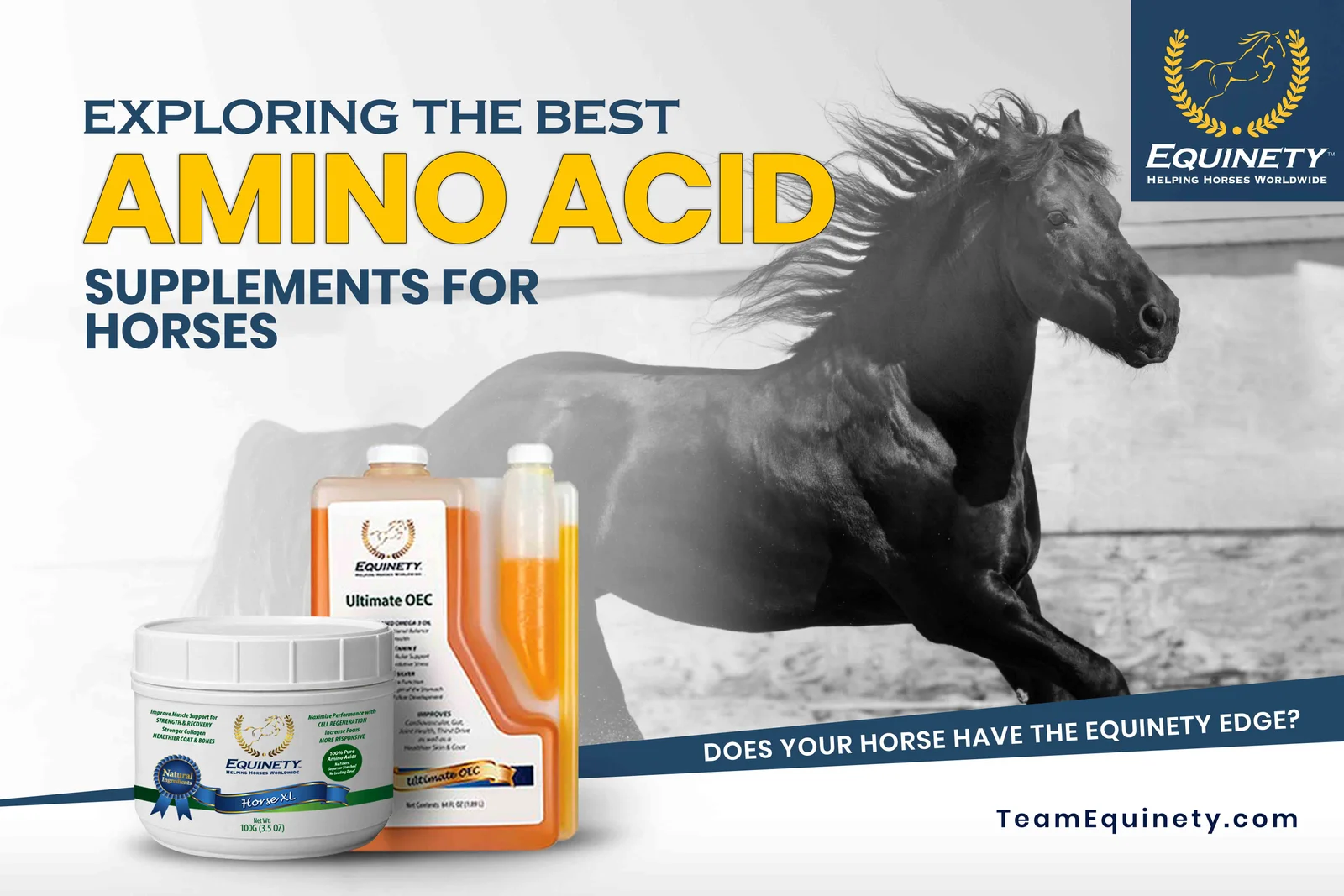
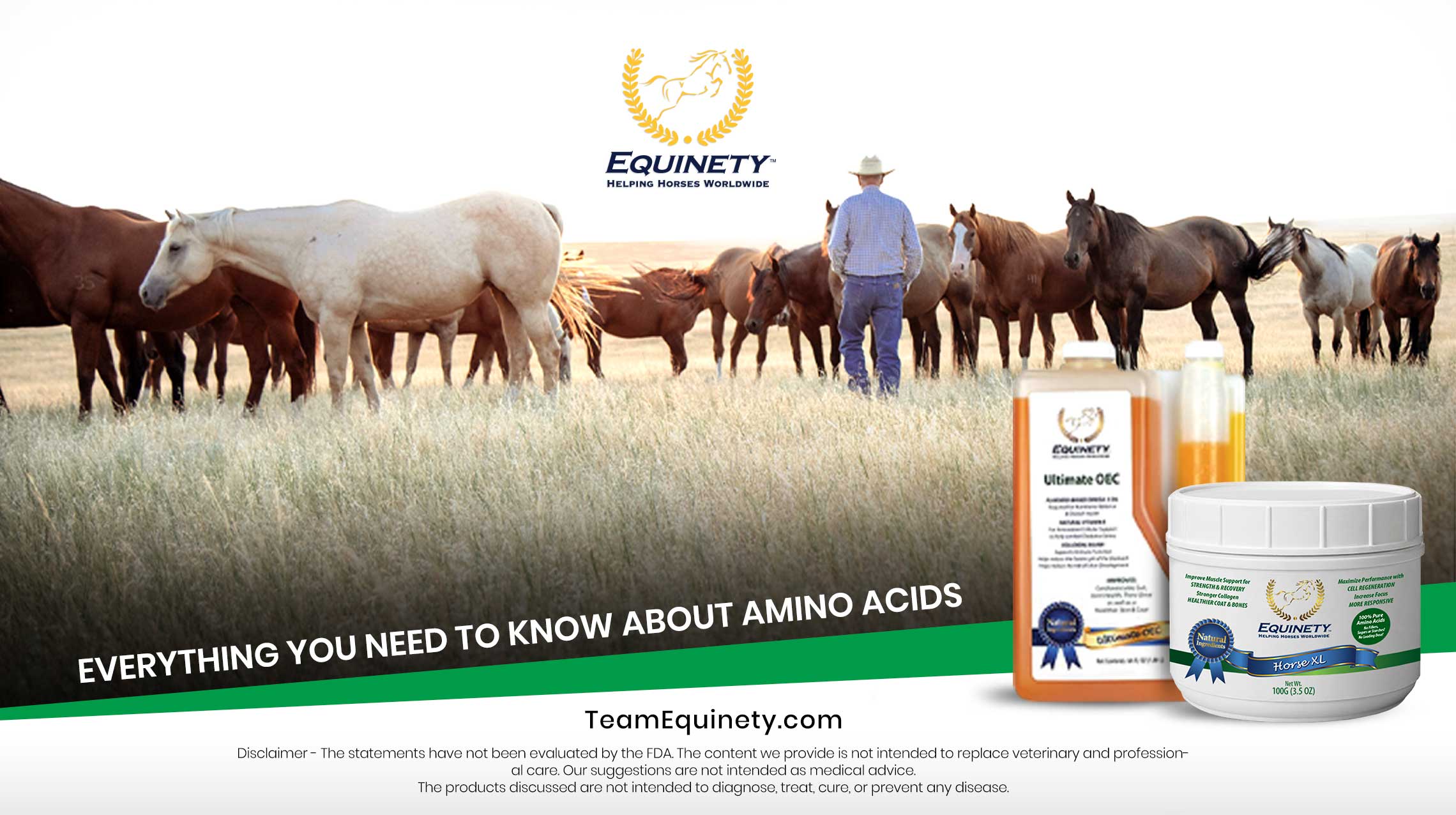
Why Equinety XL is important for your horse? Does Equinety have all the important amino acids a horse needs?
- Yes, Equinety XL is a combination of the 8 most important amino acids that your horse needs.
- L-LYSINE
- L-ARGININE
- L-ORNITHINE
- GLYCINE
- L-LEUCINE
- L-ISOLEUCINE
- L-VALINE
- L-GLUTAMINE
- Equinety XL is made of 100% pure Amino acids that are the building blocks of protein, essential for muscle growth and cellular repair.
- Feeding horses Equinety XL can help repair and rebuild muscles, allowing them to recover faster and perform better.
- Equinety XL helps horses build more muscle management and reduce the risk of injury.
- Combination of Equinety XL and Equinety Ultimate OEC repairs and nourishes cells that helps in many bodily functions, including better immune system function, hormone production, and nutrient absorption.
- Equinety XL and Equinety Ultimate OEC are the right combinations of amino acids to support athletic performance.

What customers think about Equinety System