Everything you need to know about Amino acid horse supplements

What are amino acids and why are they important for horses?

You may have heard about amino acids and their importance for your equine companion. But what exactly are amino acids and why are they essential for horses? Amino acids are the building blocks of proteins, which are crucial for many bodily functions such as muscle growth and repair, immune system support, and hormone production. There are 20 different types of amino acids, 10 of which are considered essential for horses as they cannot be produced by the body and must be obtained through their diet. These essential amino acids include lysine, methionine, threonine, tryptophan, histidine, leucine, isoleucine, valine, phenylalanine, and arginine. Each of these amino acids has a specific role in maintaining your horse’s health.

As a horse owner, it’s essential to understand the importance of amino acids in your horse’s diet. Amino acids are the building blocks of proteins, which are essential for muscle development, tissue repair, and overall health. While horses can produce some amino acids on their own, others must come from their diet.


Here are the top 10 amino acids for horses that you should know about.

1. Lysine

Lysine is an essential amino acid that plays a critical role in muscle development and immune system function. Horses require a steady supply of lysine in their diet to maintain their health and well-being.

2. Methionine
Methionine is another essential amino acid that is crucial for healthy hooves, skin, and coats. It also helps with the production of keratin, which is essential for strong and healthy hair and hooves.

3. Threonine
Threonine is an essential amino acid that plays a critical role in the development and maintenance of muscle mass. It also aids in the production of antibodies, which are essential for a healthy immune system.

4. Tryptophan
Tryptophan is an essential amino acid that is necessary for the production of serotonin, a neurotransmitter that helps regulate mood and behavior. It also helps with the development and maintenance of healthy muscle tissue.

5. Arginine
Arginine is a non-essential amino acid that plays a critical role in the production of nitric oxide, which helps to regulate blood flow and improve circulation. It is also essential for healthy immune system function.

6. Histidine
Histidine is an essential amino acid that plays a crucial role in the production of red and white blood cells. It is also necessary for the production of histamine, which is essential for healthy immune system function.

7. Valine
Valine is an essential amino acid that is necessary for the development and maintenance of healthy muscle tissue. It also helps with the production of energy and the regulation of blood sugar levels.

8. Leucine
Leucine is an essential amino acid that plays a crucial role in the development and maintenance of healthy muscle tissue. It also aids in the production of energy and the regulation of blood sugar levels.

9. Isoleucine
Isoleucine is an essential amino acid that is necessary for the development and maintenance of healthy muscle tissue. It also aids in the production of energy and the regulation of blood sugar levels.

10. Phenylalanine
Phenylalanine is an essential amino acid that is necessary for the production of neurotransmitters, which are essential for healthy brain function. It also aids in the production of energy and the regulation of blood sugar levels.

In conclusion, these are the top 10 amino acids for horses that you should know about. A balanced diet that includes these amino acids in the appropriate amounts is crucial for your horse’s overall health and well-being. Consult with your veterinarian or equine nutritionist to ensure that your horse is getting the right amount of amino acids in their diet.


How to choose the right amino acid supplement for your horse?

As a horse owner, you want to ensure that your equine friend is receiving the best possible care and nutrition. One way to achieve this is by providing them with amino acid supplements. Amino acids are the building blocks of protein and are essential for the growth and repair of tissue in horses.

However, with so many amino acid supplements available on the market, it can be challenging to choose the right one for your horse. Here are some factors to consider when selecting an amino acid supplement:

1. The type of amino acids

There are two types of amino acids: essential and non-essential. Essential amino acids cannot be produced by the body and must be obtained through the diet. Non-essential amino acids can be produced by the body. Ensure that the supplement you choose contains the essential amino acids that your horse requires.

2. The quality of the ingredients

The quality of the ingredients in the supplement is crucial. Look for a supplement that contains high-quality, bioavailable ingredients that are easily absorbed by the horse’s body. Avoid supplements that contain fillers or artificial additives.

3. The form of the supplement

Amino acid supplements come in various forms, including pellets, powders, and liquids. Choose a form that is convenient for you to administer and that your horse will readily accept.

4. The dosage

The dosage of the supplement will depend on the horse’s weight, age, and activity level. Follow the manufacturer’s instructions for dosage and consult with your veterinarian if you are unsure.

5. The reputation of the manufacturer

Choose a supplement from a reputable manufacturer that has a history of producing high-quality products. Look for reviews and feedback from other horse owners to ensure that the supplement has been effective for their horses.

In conclusion, choosing the right amino acid supplement for your horse requires careful consideration. Consider the type of amino acids, quality of ingredients, form of the supplement, dosage, and reputation of the manufacturer. By taking these factors into account, you can provide your horse with the best possible care and nutrition.


What is the impact of Amino acids on horse Coat and hoof health?

One of the most important amino acids for coat health is methionine. Methionine is an essential amino acid, meaning that horses cannot produce it themselves and must obtain it from their diet. Methionine is a key component in the production of keratin, which is the protein that makes up the majority of a horse’s hair and hooves. Without sufficient methionine, horses may experience dry, brittle hair and weak, cracked hooves. Another important amino acid for coat health is lysine. Like methionine, lysine is an essential amino acid that horses must obtain from their diet. Lysine plays a key role in the production of collagen, which is a protein that gives skin and hair their elasticity. Horses that are deficient in lysine may experience dry, dull hair and skin. In addition to methionine and lysine, there are several other amino acids that play a role in maintaining a healthy coat and hooves. These include cysteine, arginine, and tyrosine.

Can I add amino acids to senior horse diets?

As horses age, their dietary needs change. Senior horses require a well-balanced diet that supports their aging bodies and helps them maintain good health. One essential component of a senior horse’s diet is amino acids.

With time senior horses’ ability to digest and absorb nutrients decreases. This can lead to a deficiency in essential amino acids, which can have negative effects on their health. For example, a deficiency in lysine, an essential amino acid, can lead to muscle wasting and a weakened immune system. To ensure that senior horses are getting the necessary amino acids in their diets, it’s important to provide them with high-quality protein sources. Good sources of protein for senior horses include alfalfa, soybean meal, and whey protein.

It’s also important to provide senior horses with a well-balanced diet that contains all of the essential amino acids. This can be achieved through the use of high-quality senior horse feed or by working with a veterinarian or equine nutritionist to develop a custom diet plan.

In conclusion, amino acids play a crucial role in the health and well-being of senior horses. Ensuring that they are getting the necessary amino acids in their diets can help them maintain muscle mass, support their immune system, and improve their overall health. By providing high-quality protein sources and a well-balanced diet, we can help our senior horses live happy, healthy lives.

The benefits of feeding horses amino acids during training and competition

As an equestrian athlete, you want to give your horse the best possible nutrition to help them perform at their peak. One area that is often overlooked is the importance of amino acids in a horse’s diet.

Amino acids are the building blocks of protein, which is essential for muscle growth and repair. When horses are in training and competition, their muscles undergo a lot of stress which can result in muscle damage. Feeding your horse amino acids can help to repair and rebuild these muscles, allowing them to recover faster and perform better.

There are two types of amino acids: essential and non-essential. Essential amino acids cannot be produced by the horse’s body and must be obtained through their diet. Non-essential amino acids can be produced by the body, but supplementing them can still be beneficial.

Some of the key benefits of feeding your horse amino acids during training and competition include:

1. Improved muscle recovery: Amino acids can help to repair and rebuild muscles that have been damaged during exercise, allowing your horse to recover faster and perform better.

2. Increased muscle mass: Amino acids are essential for muscle growth, so feeding your horse the right combination of amino acids can help them to build more muscle mass.

3. Improved performance: By supporting muscle recovery and growth, amino acids can help your horse to perform at its best during training and competition.

4. Reduced risk of injury: Strong, healthy muscles are less likely to be injured, so feeding your horse amino acids can help to reduce their risk of injury.

5. Better overall health: Amino acids are essential for many other bodily functions, such as immune system function, hormone production, and nutrient absorption. By ensuring your horse gets enough amino acids, you can help to support their overall health and well-being.

In conclusion, feeding your horse amino acids during training and competition can have a range of benefits for their muscle recovery, growth, and overall health. By working with a qualified equine nutritionist, you can ensure that your horse’s diet is properly balanced and includes the right combination of amino acids to support their athletic performance.


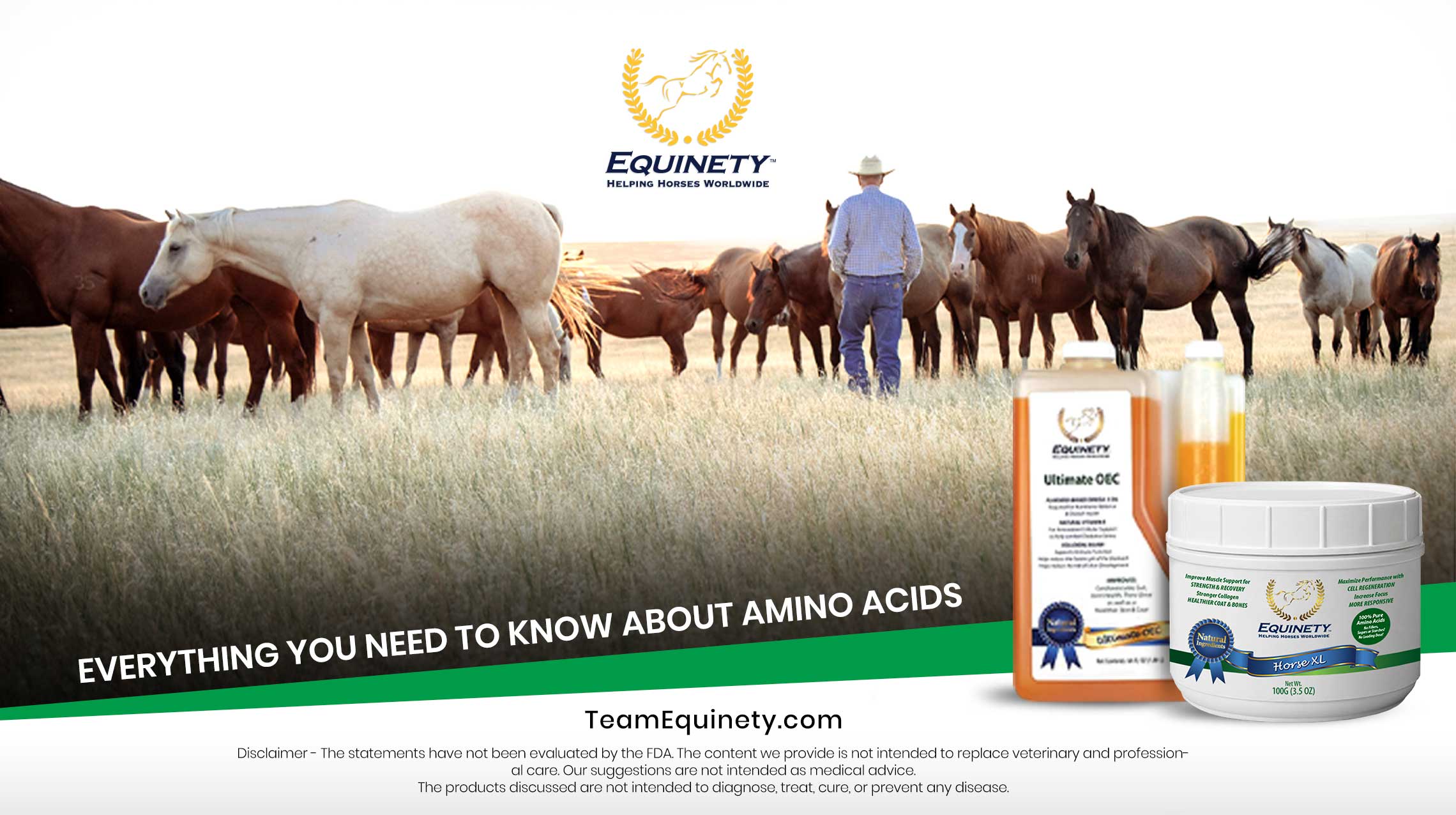
Why Equinety XL is important for your horse? Does Equinety have all the important amino acids a horse needs?

  • Yes, Equinety XL is a combination of the 8 most important amino acids that your horse needs.
  1. L-LYSINE
  2. L-ARGININE
  3. L-ORNITHINE
  4. GLYCINE
  5. L-LEUCINE
  6. L-ISOLEUCINE
  7. L-VALINE
  8. L-GLUTAMINE
  • Equinety XL is made of 100% pure Amino acids that are the building blocks of protein, essential for muscle growth and cellular repair.
  • Feeding horses Equinety XL can help repair and rebuild muscles, allowing them to recover faster and perform better.
  • Equinety XL helps horses build more muscle management and reduce the risk of injury.
  • Combination of Equinety XL and Equinety Ultimate OEC repairs and nourishes cells that helps in many bodily functions, including better immune system function, hormone production, and nutrient absorption.
  • Equinety XL and Equinety Ultimate OEC are the right combinations of amino acids to support athletic performance.


Horse Supplements


What customers think about Equinety System


Senior Horse Care Guide 2023 (Feed and Supplements)

Horses require the best diet to perform their day-to-day activities. So whether you have a performance horse or a working horse, you must take proper care of its diet. Aging is a natural process that leads to many changes in the horse. After attaining the age of 20 years, it is advised to change the horse’s diet.

Your horse can perform better in old age with fresh grass and some supplements. You should also consider nutritional needs and digestion issues to maximize the feed intake of senior horses.

If we talk about the best feed for senior horses, it should comprise minerals and vitamins necessary to provide maximum strength to them. Diet of a senior horse that is easily digested and chewed is beneficial for maintaining their health at an ideal level. Many kinds of feed are available for aged horses, but you should go for those suitable for your equine.

Best Senior Horse Supplements:

Senior horses are supposed to get a better diet to support their immunity and digestion system. Supplements that include vitamins, minerals, energy, and protein are helpful to boost the energy level of aged equine because they will give them the necessary strength. We recommend the following supplements if you want the best supplement for a senior horse.

Equinety Horse XL is a magical product for senior horses to fight against all age-related diseases. This product contains 100% pure amino acids, essential for horses to build protein in their body. There are eight different types of amino acids in this product. It is beneficial for senior horses to improve their poor hoof and coat quality, lose muscle mass, and boost recovery from any illness. These amino acids also promote cellular repair in old horses and fulfill all body requirements.

Joint issues are common in senior horses. Equinety Horse XL also deals with all types of joint problems by strengthening them and repairing damaged joints quickly. This product also provides strong bones and healthier coats to aged horses so that they can perform better. Due to cell regeneration ability, your horse will also get the best health if you regularly add Equinety Horse XL to its diet.

This product is also economical and comes in packing of 600g, which is sufficient for 100 servings. It features a natural formula, so it doesn’t have starches, soy, or sugar. Hence your senior horse will remain healthy and pose in the best health.

Equinety Ultimate OEC is another excellent product for senior horses to keep them healthy and efficient at any age. This product contains different natural ingredients that are best for the equines. This product has Vitamin E, essential for aged horses with specific health issues. Muscles, nerves, and all internal organs will work smoothly with the help of this product. It also contains colloidal silver and flaxseed-based omega 3 to support the immunity level of your equine and prevents dull coats and dry skin. Colloidal silver is also ideal as it helps fight against viral infections and bacteria that can cause series damage to aged horses.

If you want to get the perfect supplement for your senior equine, you should combine Equienty Horse XL and Equienty Ultimate OEC to make a powerful supplement for it. Combining these two products will provide your horse with vitamins, minerals, and protein and improve its health at any age. It is also quite economical and will work best with natural feed. You can give 1 scoop to your horse daily, but if it is recovering from any kind of injury or surgery, then you can give 1 scoop in the morning and 1 scoop in the evening for best results.

Senior Horse Weight Gain Supplement:

Weight loss is common in old horses due to many reasons. Bad dental conditions, low appetite, or different diseases like arthritis, eye issues, injuries, digestion issues, etc., are the main reason for weight loss.

The best way of gaining weight is to add a natural supplement to the senior horse’s diet because it will provide its body with what it needs. Suppose you are looking for the best weight gain supplement for a senior horse. In that case, you should try the combination of Equinety Horse XL and Equinety Ultimate OEC because it will make the most effective and solid supplement. Your horse will not only gain sufficient weight, but it will also help your senior equine get healthier coats and bones. This magical supplement also boosts cell regeneration and maximizes the performance of dull and aged horses.

Senior Horse Diet Care:

Diet care is essential for any age of a horse. If you own a senior horse, they need the best diet and special care. Ensure that your senior horse gets a high-quality diet because it will not help your horse perform better at this age, but it will also be able to fight different diseases and improve its immunity level.

Good diet care for senior horses will also improve their body condition. So you can add Equienty Ultimate OEC and Equinety Horse XL to their diet to provide all necessary minerals, vitamins, amino acids, and protein. It is the best diet care for your senior horse to keep it healthy and efficient.

FAQs:

What is different about senior horse feed?

A young horse can feed conveniently because it has a robust digestive system. But if you are looking for the best feed for the senior horse, you should think of a diet that is easy to chew and digest, low in sugar, low in soluble carbohydrates, and higher in fiber content.

Add fiber to their feed and ensure high-quality sources of minerals, vitamins, and protein in their diet. Feed at least three times a day, and add a natural supplement like Equinety Horse XL and Equinety Ultimate OEC to the diet of senior horses for the best energy level and health at this age.

What nutrients do older horses need?

If you have a senior horse, you should take more care of its health, so feed your horse with a high-quality diet that can fulfill all of its nutrient needs. Provide fresh grass to the senior horse as it is easy to chew and digest. Add natural supplements like Equinety Horse XL to the horse’s diet. It will provide all necessary minerals, vitamins, and amino acids for maintaining its health at an ideal level.

Related Guides for You:

7 Visual Symptoms of Horse Dying of Old Age

If we talk about a horse’s life span, a horse usually lives for 25 to 30 years. With the help of proper care and diet, a horse can live into its 30s. Different horse breeds have different ages so if we talk about the longest-living horsing breed, then American paint horses, Haflinger, Thoroughbred, Appaloosa, Arabian, and Quarter horses are those breeds that have a greater life span.

With enhanced dental and veterinary care, most horses are reaching their old age, so after a significant time, horses are experiencing aging symptoms. Generally, after 15 years, aging symptoms start appearing in horses, but few long-life slices of bread experience such changes in their twenties.

Horses start going through various mental and physical changes during Aging. You can judge many of these changes easily through visual symptoms.

List of Signs of Old Horse Dying due to Aging:

If you owe many senior horses, you may have experienced many signs of old horses dying due to Aging. But on the other hand, if you have yet to experience it or don’t know about it, you will get a list of such signs here, so take a look below.

1. Long Injuries:

If your horse is experiencing long injuries and is unable to recover from those injuries, then it is a clear sign that it will die due to Aging. After attaining old age, the horse’s body lacks energy, making it difficult to boost its immunity. It is a sign that your horse is closer to the end of its life.

2. Blur Visions:

Diminished eyesight is another common issue in aged horses leading to blurred vision. If your horse cannot recognize and distinguish among things and its ability is decreasing daily, then it is another sign of dying due to Aging.

3. Muscle Mass reduction:

Muscle mass plays a vital role in the strength of a horse, and it provides maximum energy, but after reaching the age of 15 years, many horses start experiencing loss of muscle mass. If your horse breed is extended living, you will experience such mass reduction after 20 to 25 years of age.

4. No Interest in Food:

If a horse is not taking an interest in eating food or showing poor appetite, then it does not mean that your horse will die soon. Lack of interest in eating can be due to many reasons, but if your horse is senior and shows a prolonged lack of interest in food, it may indicate that you may expect the end of the horse soon.

5. Unable to stand for a long time:

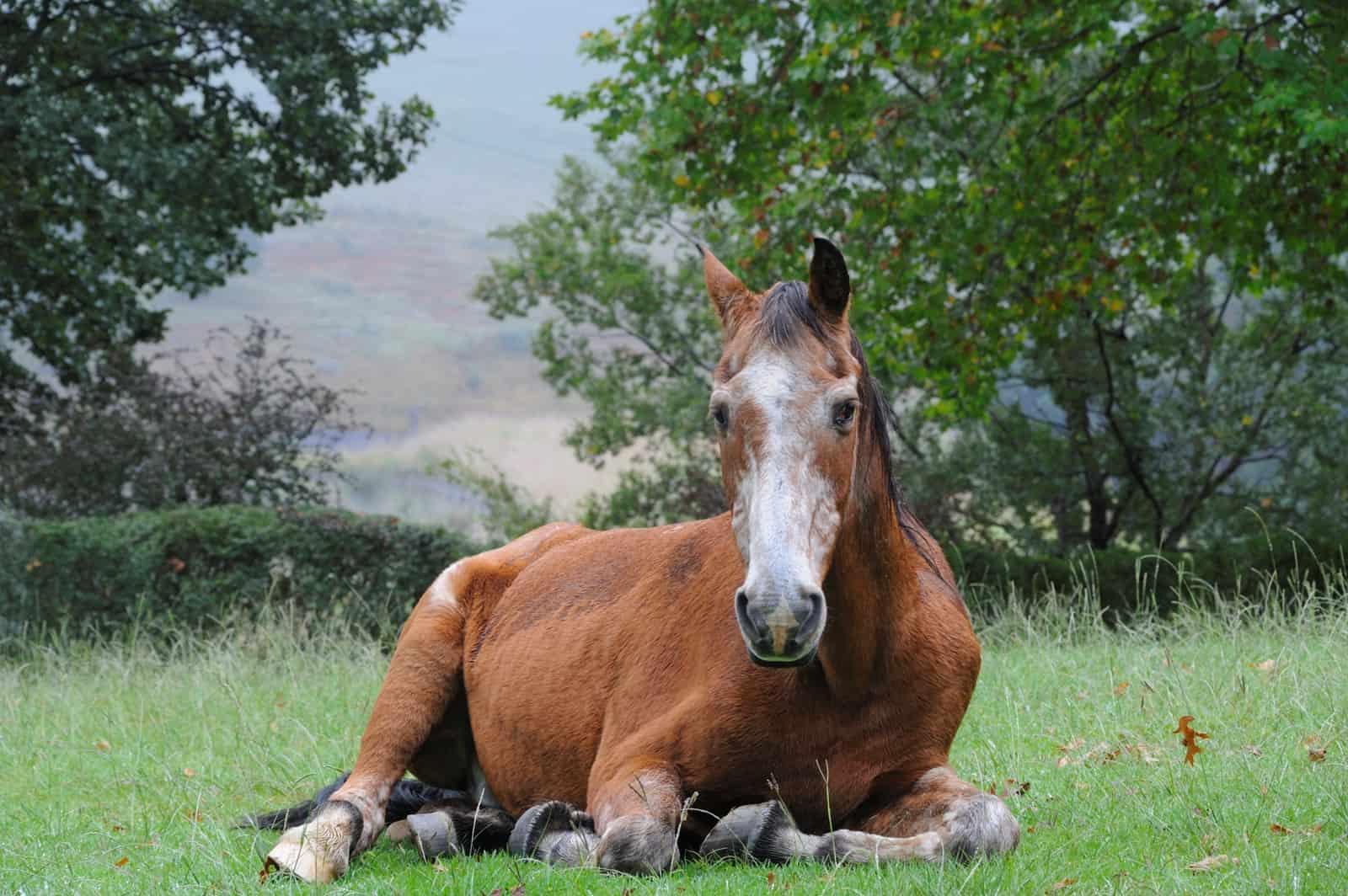
A horse that is facing difficulty standing up and even trying to stand up frequently but after a short time it lies down then it is another symptom of the death of horse due to Aging. In older horses, the muscle power becomes too weak. Due to this reason, they can only stand up for a short time even if they want to do it.

6. Digestion Issues:

A horse’s digestive system is its whole strength. With time, it starts facing different issues, especially after reaching the age of 15 years. It would not be wrong if we say that digestion issues are one of the biggest reasons for the death of horses because of Aging.

7. Weight loss:

An ordinarily healthy horse does not face rapid changes in weight because it remains stable. The weight of a horse will never increase or decrease rapidly. So if your horse is facing such loss and it is older, then be ready for death because of Aging. It is one of the common symptoms in many horses that may be due to illness or a weak immune system.

Do horses know when they are going to die?

Well, it is debatable, so we say that a horse is a brilliant animal, but it is impossible for a horse to know precisely about its death. Due to the aging factor, many horses start showing strange behavior like stopping eating, lying down most of the time, and experiencing a few other changes like grey hair and a rough coat. Still, not a single behavior can tell that the horse is familiar about its soon death. All of this behavior is common due to illness and aging factors, so you may say that horses may experience strange changes but don’t know when they will die.

How to comfort a senior dying horse?

it is not easy to realize that your favorite partner will die soon, but after knowing this fact, you should try to make your horse’s remaining days of life comfortable. There are many ways to comfort a senior dying horse with their help.

  • Spend Time with Horse:

A horse always values the company of its owner, so you should try to spend maximum time with it. Your horse may experience diminished eyesight and can’t recognize you after seeing, but it will surely recognize your voice, so show your care with your voice. It will make the horse much more comfortable and happy at the end of its life.

  • Take the horse for a walk:

A horse loves to walk with its partner; even in the last moments of life, it will prefer to go for a walk. So if your horse has enough energy, do some walking and exercise. It will help the body of the horse in blood circulation.

  • Proper Medication:

You are responsible for not leaving the horse at the end of its life. So proper medication will help your horse to spend its last days peacefully. Consult your vet for pain medication, as your horse can get maximum rest with the help of medicine.

  • Don’tForce to Eat:

Sadly, your horse will not be able to eat and digest enough diet at the dying age, so it is recommended not to force your horse to eat. The horse will lose weight, but forcing it to eat something will also bring stress.

  • Do Familiar Things:

Try to do all those things your horse is familiar with to comfort a dying horse. Your horse may not experience things in the desired manner, but still, it will provide maximum comfort to it.

How long can a horse lay down before dying?

There is no exact time that a horse will lay down before dying because the exact time varies in all horses. If we talk about average duration, it will lay down up to 3 hours before dying.

Related Guides for You: