Back Pain in Horses: Symptoms, Causes, Treatment, Prevention Tips

Back pain is one of the common health issues that a horse can face at any age. The back of the horse comprises the complex structure of tendons, muscles, cartilage, ligaments, and bones, so that you can feel any discomfort or pain in the back of the horse can be felt on all these body parts.

A horse suffering from back pain will be unable to perform daily tasks, and its performance will be affected badly. Being a horse owner, you must know about symptoms, causes, treatment, and preventive measures regarding back pain in horses.
Symptoms of Backpain in Equine:

It is not an easy task to diagnose back pain in horses as they cannot tell us where they are hurting, so you must be aware of common notable signs and symptoms.

  • Lameness:

Lameness is one of the visible symptoms of back pain in horses, so if a horse exhibits an uneven gait or shows reluctance in movement, especially while riding, it may be due to back pain.

  • Restricted Movement:

Back pain leads to difficulty in movement and exercise. So, if your equine is unable to move normally, then it is another sign of pain in the back.

  • Behavioral Problems:

With the help of behavioral clues, you can quickly diagnose back pain in horses. If the horse is not responsive to your aids while riding or cannot concentrate, these behavioral changes can be due to back pain. Your equine may arch his back and frequently look at his back with the development of annoying habits during rides in this condition.

  • Pain and Tenderness:

You can guess the back pain of a horse by gently palpating the back. It may twitch, flinch, or react when pressure is applied to specific areas at the back.

  • Reduced Performance:

A horse that struggles while performing different tasks in which they excel, like racing, dressage, or jumping, can be a victim of back pain.

Causes for Backpain in Horse:

Many factors can cause back pain in equine, so a few are below.

  • Injury:

Trauma to the back, such as accident, fall, or sudden jolts, is responsible for causing back pain in horses.

  • Arthritis:

Horses develop arthritis in the spine with aging, which causes pain and stiffness, which can be another cause of back pain.

  • Dental Problems:

Dental issues also lead to poor appetite by affecting the eating ability of horses, thus leading to back pain due to an altered posture.

  • Overwork:

Overwork, especially excessive exercise on hard surfaces, can strain the back muscles and lead to pain.

  • Inadequate Warm-Up and Cool Down Time:

If you are not providing adequate warm-up and cool-down time to your equine before and after exercise, it will badly affect the back muscles and result in discomfort and pain.

  • Improper Fitted Tack:

Weight can be distributed evenly only when the tack is fitted correctly. So, improper fitting of saddles or bridles can create pressure points and cause back pain.

1. How to Treat Back Pain in Horse?

In many cases, you can treat back pain quickly by following a few easy steps. So, if your equine is also facing back pain, then you may go for any of the below-mentioned options.

2. Saddle Fitting:

Proper saddle fitting is essential to treat back pain in horses, so consult a professional saddle fitter to prevent future back pain.

3. Change in Exercise:

Modify the exercise routine of your equine so that they don’t overwork, and then gradually reintroduce them to work when they recover from back pain.

4. Rest and Rehabilitation:

Excessive exercise and overwork are among the leading causes of back pain in equine, so proper rest is essential for the recovery of horses. Physical therapy and massage are some unique rehabilitation techniques that will help the horse regain its strength and performance.

5. Consult with a Vet:

A qualified Vet can diagnose and devise the best treatment for a horse with back pain. The vet will adequately examine the issue and use proper medication or other techniques for treatment.

Prevention Tips to Avoid Backpain and Fractures:

By following these prevention tips, your equine can prevent back pain and fractures.

1. Balanced Diet:

The equine diet prevents back pain and fractures, so you must include vitamins and minerals in the horse’s feed. Natural supplements are the best way of providing all the necessary ingredients that the body of a horse requires so that you can follow natural supplements.

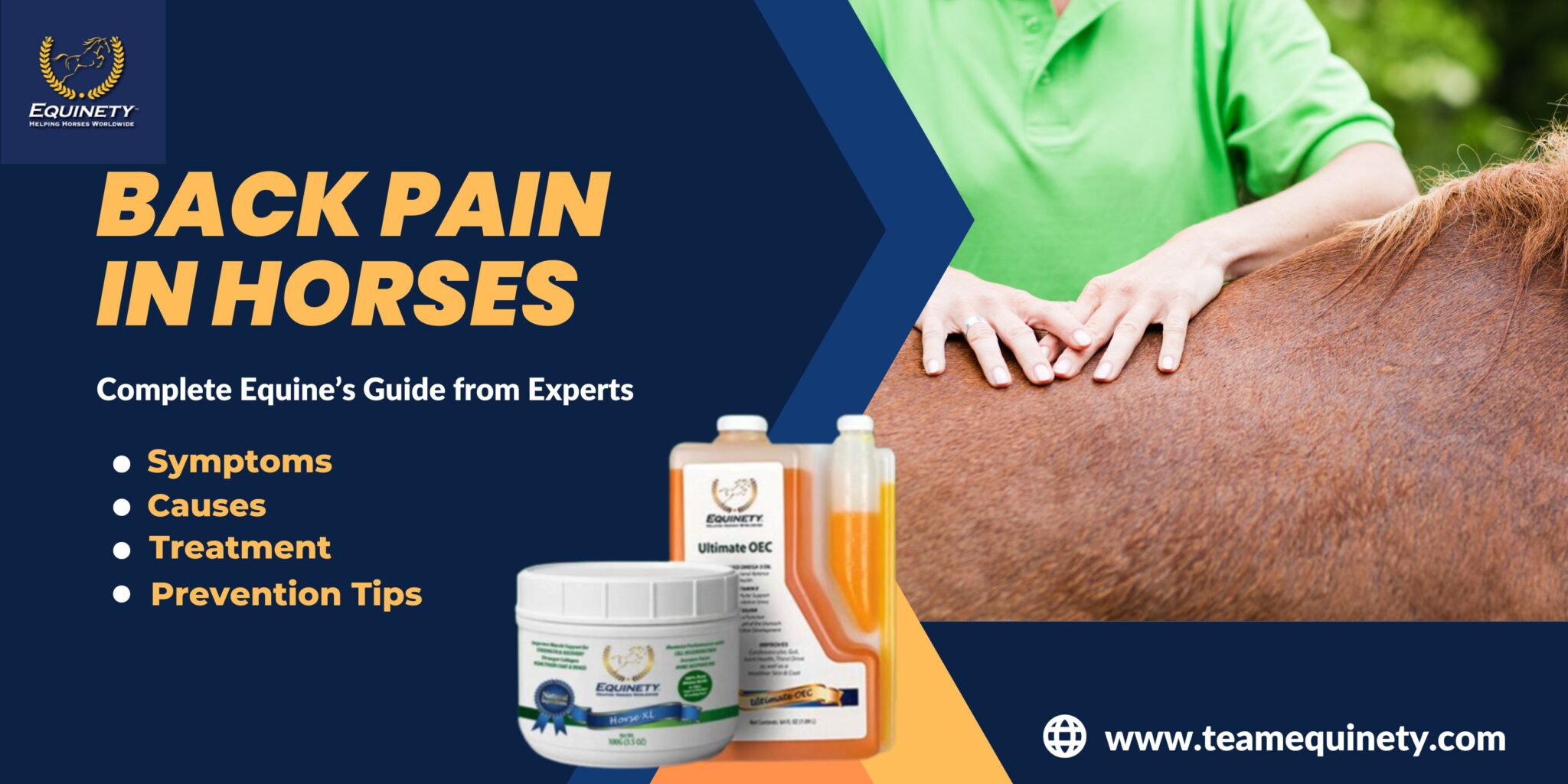
Equinety Horse XL is one of the most amazing natural products for horses that improve muscle support for strength and recovery. You can maximize the performance of horses with cell generation with the help of this product. It will provide the necessary support to the bones of the equine, and it will be able to prevent back pain and fractures. 100% natural amino acids are added in this product, so without any fillers, soy, and sugar, the body of a horse will get what it requires for its best physical health.

Equinety Ultimate OEC is another magical product that supports joint health, healthier coats, and equine skin. It also promotes gastric health and can have a more significant impact on the back pain of horses. This natural product contains flaxseed-based omega-3 oil, colloidal silver, and natural vitamin E. If you combine this product with Equinety Horse XL, then your horse will get a perfect natural supplement. This supplement will ensure the overall health of your equine and prevent any kind of back pain.

4. Easing into Exercise:

An intense workload or exercise is quite dangerous for the well-being of horses. Slowly introduce your equine to work and remember only to ask it to complete the convenient task. Start with low and light exercises to build a routine and gradually increase the exercise or work intervals.

5. Proper Rest:

Allow your horse to rest well to help recover muscles and prevent fractures.

6. Quality Tack:

Invest in quality tack that can distribute weight evenly and minimize pressure points.

7. Dental Checkups:

Dental issues also contribute to back pain in equine, so regular dental checkups will help prevent back pain.

Exercises for Horses with Sore Backs:

Exercise and rehabilitation process play a vital role in the recovery of horses with sore backs, so go for these exercises that will be beneficial for your equine.

1. Ground Work:

Long lining and lunging are groundwork exercises that will help the equine strengthen core muscles and improve balance, so they are best for horses with sore backs.

2. Stretching:

You can reduce muscle tension and increase flexibility with the help of gentle stretches. Pelvic tilts, lateral flexion, and neck stretch benefit horses with sore backs.

3. Massage and Physical Therapy:

Physical therapy and professional massage will help your equine in relieving back pain and promote the process of healing.

4. Walking Up and Down Hills:

Walking up and down hills is another best stretching exercise to improve the muscles of the back and hindquarters. Start with gentle and short hills and gradually increase the steepness and length for the most effective treatment.

FAQs:

Can ulcers cause back pain in horses?

Yes, ulcers cause back pain in horses quickly because it can cause muscle spasms in the hindquarters and back.

What is lumbar back pain in horses?

Discomfort or pain in the lower back region is lumber back pain that can be the result of various factors like trauma, overuse, muscle imbalances, and underlying conditions.

Expert’s Equine Guides for You:

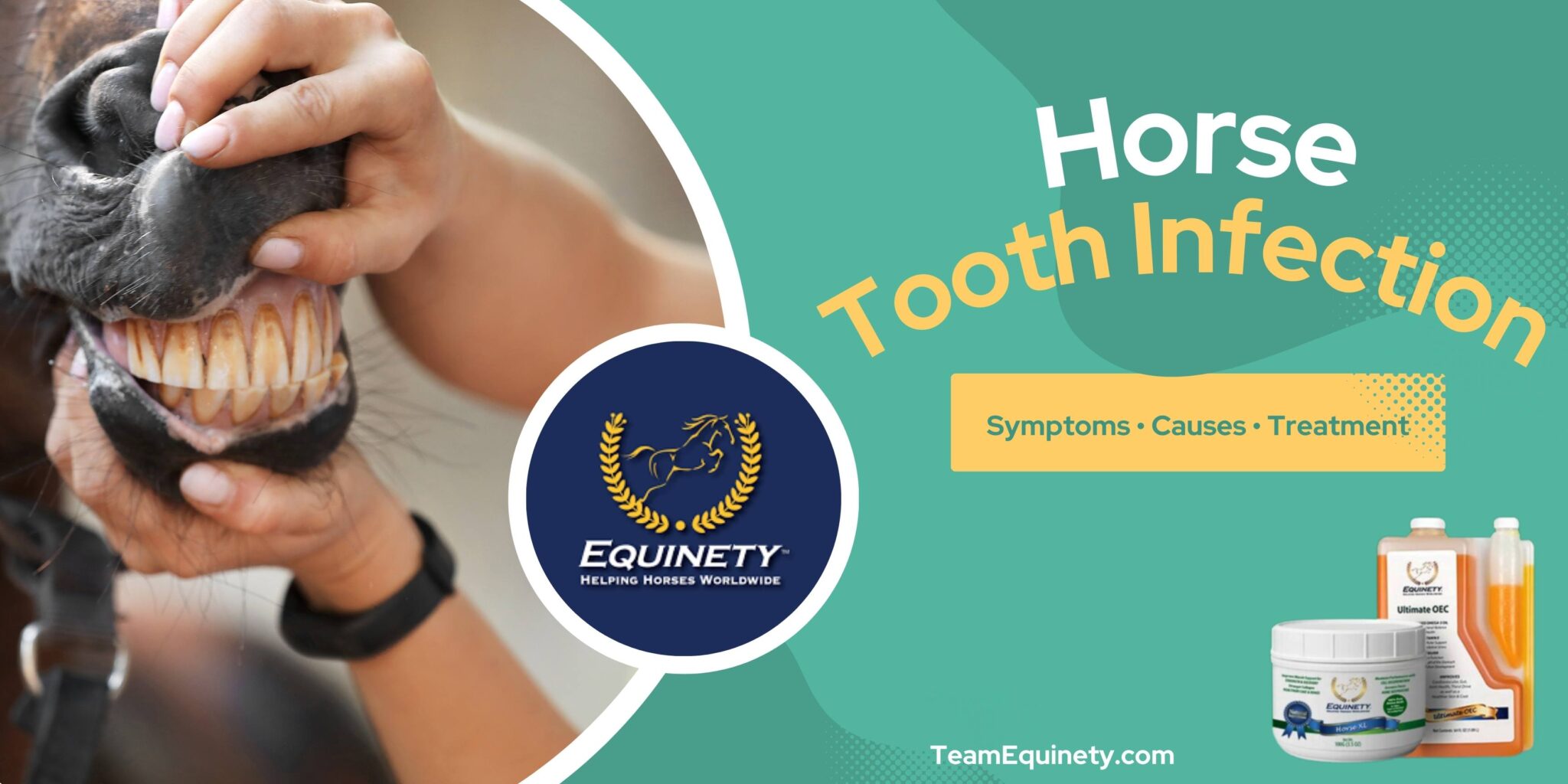
Horse Tooth Infection: Signs, Causes, Treatment, Prevention (Full Guide)

Horses are herbivores as they eat plants. They need to have strong teeth; otherwise, they will not be able to eat correctly, affecting their overall health. Equine dental infections can be painful as these infections primarily infect the teeth and mouth of horses. If these infections are left untreated, then they can cause serious health issues.

If your horse is facing any teeth issues, then you must be aware of the signs of tooth infections as it will help you to understand how to prevent and treat them effectively.
Signs of Horse Tooth Infections:

For early intervention, it is essential to understand the signs of horse tooth infections. So here, you will learn about common indicators of such disorders.

  • Dental Pain:

A horse facing any kind of teeth infection will experience pain while eating, especially when biting or chewing. If your equine is eating slowly or dropping partially nibbled food, then it is an indicator of discomfort caused by dental pain.

  • Weight Loss:

Dental pain caused by tooth infections will lead to less food intake and weight loss over time, so if your horse is facing unexplained weight loss, you must check for tooth issues.

  • Head Tilting:

Horses start tilting their heads or shaking them to alleviate the pain in teeth caused by infection. Head shaking or tilting can also be due to different reasons, but if you are also feeling symptoms of difficulty in eating or chewing, then it can be due to a tooth infection.

  • Fever:

Dental infections lead to discomfort in horses, and their bodies struggle against the pain. Most of the horses who are suffering from tooth infections also experience fever.

  • Excessive Salivation:

Excessive salivation or drooling, accompanied mainly by lousy breath, is another sign of discomfort in the mouth that may be caused by infection in teeth.

  • Swelling:

In severe tooth infection, a horse may experience swelling around the nose, face, and jaw. In such conditions, smelling discharge from the mouth or nostrils may occur frequently.

Causes of Tooth Infections in Horses:

If we talk about the causes of tooth infections in horses, then the following are a few common causes.

1. Trauma:

If we talk about the most common causes of tooth infections in horses, then trauma is one of them. A horse can experience trauma while chewing a hard object, for example, a fence post or a stone. When a hard thing hits the mouth of the horse, it can affect the teeth badly and lead to tooth infection.

2. Aging:

Aging is another contributory factor in horse tooth infections. As horse age increases, their teeth become worn down, and they start experiencing different dental issues and tooth infections.

3. Tartar:

Tartar can develop quickly on the teeth of horses, and if it is not treated well on time, then it can contribute to tooth infections.

4. Misalignment of Teeth:

This condition of teeth is known as dental malocclusion, where the teeth of a horse do not meet appropriately while chewing food. It can create sharp points and uneven wear that leads to tooth infection in equine.

5. Food particles:

Food particles between the teeth of the equine are also dangerous and create a favorable condition for infections.

Treatment of Tooth Infections:

Treatment of tooth infections in horses varied depending upon the severity and location of illness. Here are some standard treatment options:

  • Tooth Extraction:

If the infection in the tooth is of severe condition, then it may need to be extracted if you can’t save it. A tooth extraction should be the last option, but sometimes, it is necessary to prevent further spread of infection.

  • Pain Management:

During the healing process, it is necessary to go for pain management medications such as anti-inflammatory medicine.

  • Antibiotics:

A vet can suggest any antibiotic to treat secondary infections because they are suitable for preventing diseases in the teeth of the equine.

  • Nutritional Support:

You also have to adjust the diet of horses, which can aid in recovery and prevent future dental issues. It would be best if you adopted such a diet plan that contains the necessary nutrients for healthy teeth.

  • Dental Floating:

For correction of misalignment of teeth, you can adopt dental floating, where a veterinarian uses specialized tools to balance the sharp points and uneven surfaces on the teeth of a horse. It is necessary and helpful in correcting malocclusion, that can minimize the risk of infection in the future.

Prevention of Horse Tooth Infections:

Prevention is always the most effective and less costly than treatment of infections in the tooth of the horse. A few preventive measures explained below can help the horse owners to take for the better dental health of their equine.

1. Regular Dental Checkups:

Regular dental checkups are the best preventive measure for tooth infections in the horse because they will help address any dental issue before it becomes severe. You must consult with a qualified veterinarian for dental checkups of your equine after regular intervals.

2. Monitor Dental Health:

Closely observe the dental health of your equine and look for any signs of discomfort in the mouth. Early detection is quite beneficial as it can make a significant difference in the treatment outcome.

3. Age Appropriate Care:

The dental needs of a horse change with age, so ensure the age-appropriate care of teeth of young, adult, and senior horses.

4. Balanced Diet:

A balanced diet is one of the most important preventive measures for tooth infections in equine. Go for such a diet that contains the necessary amount of vitamins, minerals, and amino acids, as it will ensure not only dental health but the overall health of the equine.

5. Inclusion of Natural Supplements in Diet:

Natural supplements are the best way of ensuring the desired health of the horse, so if we talk about dental infections, then you can also eliminate the risk of them by including natural supplements in the diet of your equine.

Equinety Horse XL and Equinety Ultimate OEC:

Equinety Horse XL and Equinety Ultimate OEC are two unique products that can combine to make the best natural supplement for your equine. This supplement will help your horse in preventing tooth infections. These products contain vitamins, minerals, amino acids, colloidal silver, and other necessary ingredients for the best teeth health. These supplements will help maintain healthy teeth and help in proper chewing and digestion.

Expert’s Equine Guides for You:

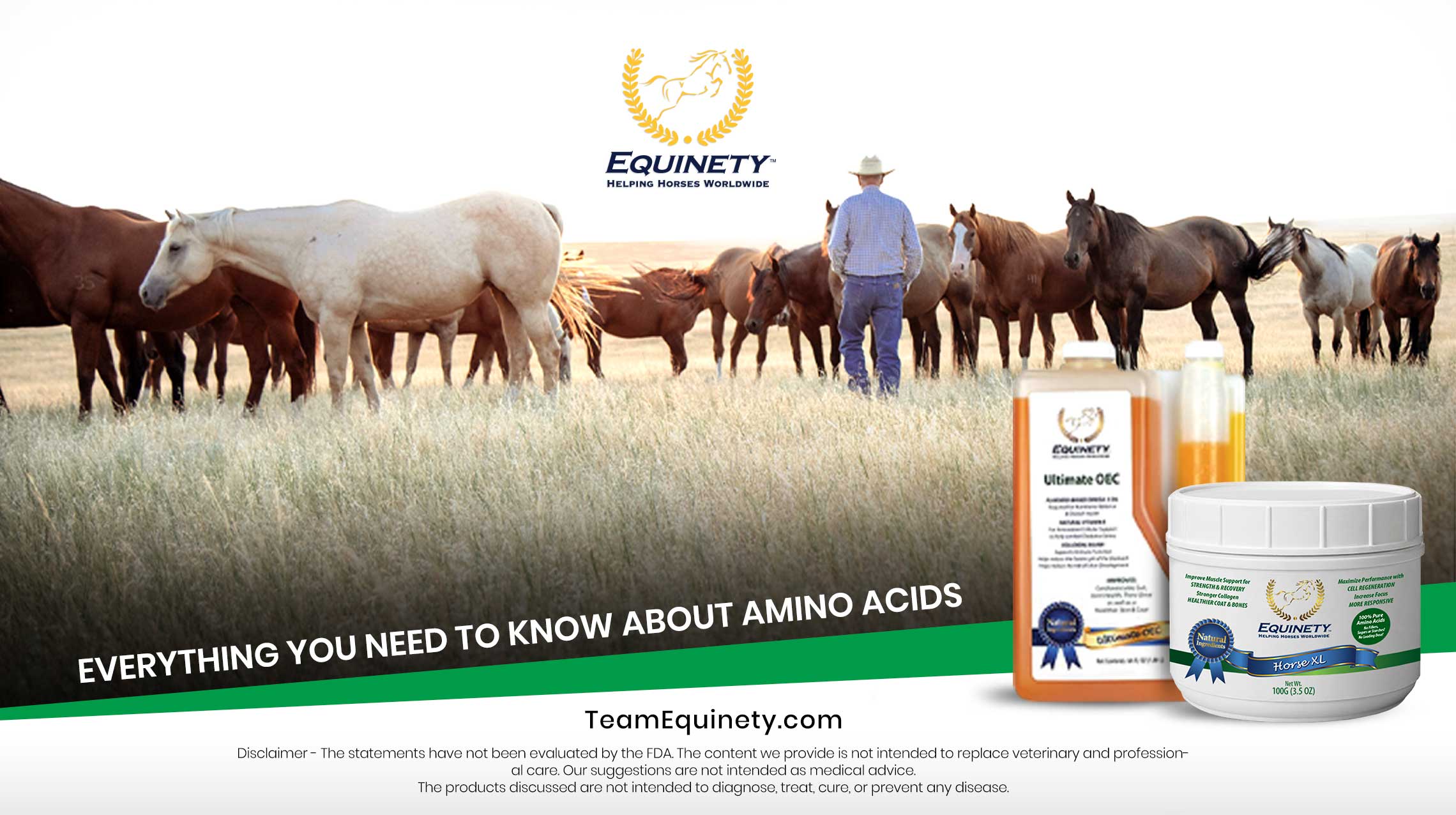
Everything you need to know about Amino acid horse supplements

What are amino acids and why are they important for horses?

You may have heard about amino acids and their importance for your equine companion. But what exactly are amino acids and why are they essential for horses? Amino acids are the building blocks of proteins, which are crucial for many bodily functions such as muscle growth and repair, immune system support, and hormone production. There are 20 different types of amino acids, 10 of which are considered essential for horses as they cannot be produced by the body and must be obtained through their diet. These essential amino acids include lysine, methionine, threonine, tryptophan, histidine, leucine, isoleucine, valine, phenylalanine, and arginine. Each of these amino acids has a specific role in maintaining your horse’s health.

As a horse owner, it’s essential to understand the importance of amino acids in your horse’s diet. Amino acids are the building blocks of proteins, which are essential for muscle development, tissue repair, and overall health. While horses can produce some amino acids on their own, others must come from their diet.


Here are the top 10 amino acids for horses that you should know about.

1. Lysine

Lysine is an essential amino acid that plays a critical role in muscle development and immune system function. Horses require a steady supply of lysine in their diet to maintain their health and well-being.

2. Methionine
Methionine is another essential amino acid that is crucial for healthy hooves, skin, and coats. It also helps with the production of keratin, which is essential for strong and healthy hair and hooves.

3. Threonine
Threonine is an essential amino acid that plays a critical role in the development and maintenance of muscle mass. It also aids in the production of antibodies, which are essential for a healthy immune system.

4. Tryptophan
Tryptophan is an essential amino acid that is necessary for the production of serotonin, a neurotransmitter that helps regulate mood and behavior. It also helps with the development and maintenance of healthy muscle tissue.

5. Arginine
Arginine is a non-essential amino acid that plays a critical role in the production of nitric oxide, which helps to regulate blood flow and improve circulation. It is also essential for healthy immune system function.

6. Histidine
Histidine is an essential amino acid that plays a crucial role in the production of red and white blood cells. It is also necessary for the production of histamine, which is essential for healthy immune system function.

7. Valine
Valine is an essential amino acid that is necessary for the development and maintenance of healthy muscle tissue. It also helps with the production of energy and the regulation of blood sugar levels.

8. Leucine
Leucine is an essential amino acid that plays a crucial role in the development and maintenance of healthy muscle tissue. It also aids in the production of energy and the regulation of blood sugar levels.

9. Isoleucine
Isoleucine is an essential amino acid that is necessary for the development and maintenance of healthy muscle tissue. It also aids in the production of energy and the regulation of blood sugar levels.

10. Phenylalanine
Phenylalanine is an essential amino acid that is necessary for the production of neurotransmitters, which are essential for healthy brain function. It also aids in the production of energy and the regulation of blood sugar levels.

In conclusion, these are the top 10 amino acids for horses that you should know about. A balanced diet that includes these amino acids in the appropriate amounts is crucial for your horse’s overall health and well-being. Consult with your veterinarian or equine nutritionist to ensure that your horse is getting the right amount of amino acids in their diet.


How to choose the right amino acid supplement for your horse?

As a horse owner, you want to ensure that your equine friend is receiving the best possible care and nutrition. One way to achieve this is by providing them with amino acid supplements. Amino acids are the building blocks of protein and are essential for the growth and repair of tissue in horses.

However, with so many amino acid supplements available on the market, it can be challenging to choose the right one for your horse. Here are some factors to consider when selecting an amino acid supplement:

1. The type of amino acids

There are two types of amino acids: essential and non-essential. Essential amino acids cannot be produced by the body and must be obtained through the diet. Non-essential amino acids can be produced by the body. Ensure that the supplement you choose contains the essential amino acids that your horse requires.

2. The quality of the ingredients

The quality of the ingredients in the supplement is crucial. Look for a supplement that contains high-quality, bioavailable ingredients that are easily absorbed by the horse’s body. Avoid supplements that contain fillers or artificial additives.

3. The form of the supplement

Amino acid supplements come in various forms, including pellets, powders, and liquids. Choose a form that is convenient for you to administer and that your horse will readily accept.

4. The dosage

The dosage of the supplement will depend on the horse’s weight, age, and activity level. Follow the manufacturer’s instructions for dosage and consult with your veterinarian if you are unsure.

5. The reputation of the manufacturer

Choose a supplement from a reputable manufacturer that has a history of producing high-quality products. Look for reviews and feedback from other horse owners to ensure that the supplement has been effective for their horses.

In conclusion, choosing the right amino acid supplement for your horse requires careful consideration. Consider the type of amino acids, quality of ingredients, form of the supplement, dosage, and reputation of the manufacturer. By taking these factors into account, you can provide your horse with the best possible care and nutrition.


What is the impact of Amino acids on horse Coat and hoof health?

One of the most important amino acids for coat health is methionine. Methionine is an essential amino acid, meaning that horses cannot produce it themselves and must obtain it from their diet. Methionine is a key component in the production of keratin, which is the protein that makes up the majority of a horse’s hair and hooves. Without sufficient methionine, horses may experience dry, brittle hair and weak, cracked hooves. Another important amino acid for coat health is lysine. Like methionine, lysine is an essential amino acid that horses must obtain from their diet. Lysine plays a key role in the production of collagen, which is a protein that gives skin and hair their elasticity. Horses that are deficient in lysine may experience dry, dull hair and skin. In addition to methionine and lysine, there are several other amino acids that play a role in maintaining a healthy coat and hooves. These include cysteine, arginine, and tyrosine.

Can I add amino acids to senior horse diets?

As horses age, their dietary needs change. Senior horses require a well-balanced diet that supports their aging bodies and helps them maintain good health. One essential component of a senior horse’s diet is amino acids.

With time senior horses’ ability to digest and absorb nutrients decreases. This can lead to a deficiency in essential amino acids, which can have negative effects on their health. For example, a deficiency in lysine, an essential amino acid, can lead to muscle wasting and a weakened immune system. To ensure that senior horses are getting the necessary amino acids in their diets, it’s important to provide them with high-quality protein sources. Good sources of protein for senior horses include alfalfa, soybean meal, and whey protein.

It’s also important to provide senior horses with a well-balanced diet that contains all of the essential amino acids. This can be achieved through the use of high-quality senior horse feed or by working with a veterinarian or equine nutritionist to develop a custom diet plan.

In conclusion, amino acids play a crucial role in the health and well-being of senior horses. Ensuring that they are getting the necessary amino acids in their diets can help them maintain muscle mass, support their immune system, and improve their overall health. By providing high-quality protein sources and a well-balanced diet, we can help our senior horses live happy, healthy lives.

The benefits of feeding horses amino acids during training and competition

As an equestrian athlete, you want to give your horse the best possible nutrition to help them perform at their peak. One area that is often overlooked is the importance of amino acids in a horse’s diet.

Amino acids are the building blocks of protein, which is essential for muscle growth and repair. When horses are in training and competition, their muscles undergo a lot of stress which can result in muscle damage. Feeding your horse amino acids can help to repair and rebuild these muscles, allowing them to recover faster and perform better.

There are two types of amino acids: essential and non-essential. Essential amino acids cannot be produced by the horse’s body and must be obtained through their diet. Non-essential amino acids can be produced by the body, but supplementing them can still be beneficial.

Some of the key benefits of feeding your horse amino acids during training and competition include:

1. Improved muscle recovery: Amino acids can help to repair and rebuild muscles that have been damaged during exercise, allowing your horse to recover faster and perform better.

2. Increased muscle mass: Amino acids are essential for muscle growth, so feeding your horse the right combination of amino acids can help them to build more muscle mass.

3. Improved performance: By supporting muscle recovery and growth, amino acids can help your horse to perform at its best during training and competition.

4. Reduced risk of injury: Strong, healthy muscles are less likely to be injured, so feeding your horse amino acids can help to reduce their risk of injury.

5. Better overall health: Amino acids are essential for many other bodily functions, such as immune system function, hormone production, and nutrient absorption. By ensuring your horse gets enough amino acids, you can help to support their overall health and well-being.

In conclusion, feeding your horse amino acids during training and competition can have a range of benefits for their muscle recovery, growth, and overall health. By working with a qualified equine nutritionist, you can ensure that your horse’s diet is properly balanced and includes the right combination of amino acids to support their athletic performance.


Why Equinety XL is important for your horse? Does Equinety have all the important amino acids a horse needs?

  • Yes, Equinety XL is a combination of the 8 most important amino acids that your horse needs.
  1. L-LYSINE
  2. L-ARGININE
  3. L-ORNITHINE
  4. GLYCINE
  5. L-LEUCINE
  6. L-ISOLEUCINE
  7. L-VALINE
  8. L-GLUTAMINE
  • Equinety XL is made of 100% pure Amino acids that are the building blocks of protein, essential for muscle growth and cellular repair.
  • Feeding horses Equinety XL can help repair and rebuild muscles, allowing them to recover faster and perform better.
  • Equinety XL helps horses build more muscle management and reduce the risk of injury.
  • Combination of Equinety XL and Equinety Ultimate OEC repairs and nourishes cells that helps in many bodily functions, including better immune system function, hormone production, and nutrient absorption.
  • Equinety XL and Equinety Ultimate OEC are the right combinations of amino acids to support athletic performance.


Horse Supplements


What customers think about Equinety System