Horse Ulcers: Symptoms, Causes, and Treatment (2023)

Ulcer is one of the common diseases in horses that you should ignore at any level because it leads to many dangerous consequences. As a horse owner, you must know about ulcer symptoms, causes, and treatment.

Equine Ulcers Behavior:

If you notice strange changes in your equine’s behavior, it may be due to the presence of an ulcer. Your horse will start avoiding its regular activities, like willingness to perform specific movements and daily activities.

Ulcers in the Equine stomach make them feel uncomfortable, and they express irritation with the help of teeth grinding. Poor response in horses is also associated with gastric or stomach ulcers because they bear the pain that leads to a change in behavior. If the horse is showing aggressive behavior while riding, you must consult a Vet, as it may be due to an ulcer.

5 Noticeable Signs and Symptoms of Ulcers in Horses:

An excessive amount of acid in the stomach of horses leads to ulcers, and they can be diagnosed with the help of a few noticeable signs and symptoms. Some of the common symptoms of ulcers in horses are below.

1. Reduced Appetite:

Stomach disorders due to ulcers will lead to the poor appetite of equine. If your horse is reluctant to eat food, then there are more chances it is a symptom of an ulcer. A sudden change in feeding habits depends on gastric ulcers that you can notice conveniently.

2. More Saliva:

A horse produces almost 10 liters of saliva per day to buffer the acid produced in the stomach. But if you are experiencing excessive salivation in your equine, it is not normal. An excessive amount of saliva is a big sign of an ulcer in the mouth or stomach of the horse.

3. Weight Loss:

Ulcers in the stomach of the equine will lead to poor appetite, and its weight will reduce significantly. Weight loss may be the reason for poor nutrition absorption due to an ulcer damaging the horse’s stomach. Even if your horse is eating normally but still losing weight, you should consult your vet to diagnose any possible chances of an ulcer.

4. Bad Coat:

A healthy horse has a shiny, smooth, and fine coat. Whereas if a horse faces a stomach ulcer, it will lead to a wrong coat. If your equine coat is dry and has lots of loose hair, it is one of the ulcer indicators. A horse’s coat indicates its health, so you should not ignore any signs of dryness, lack of shedding, and brittle hair.

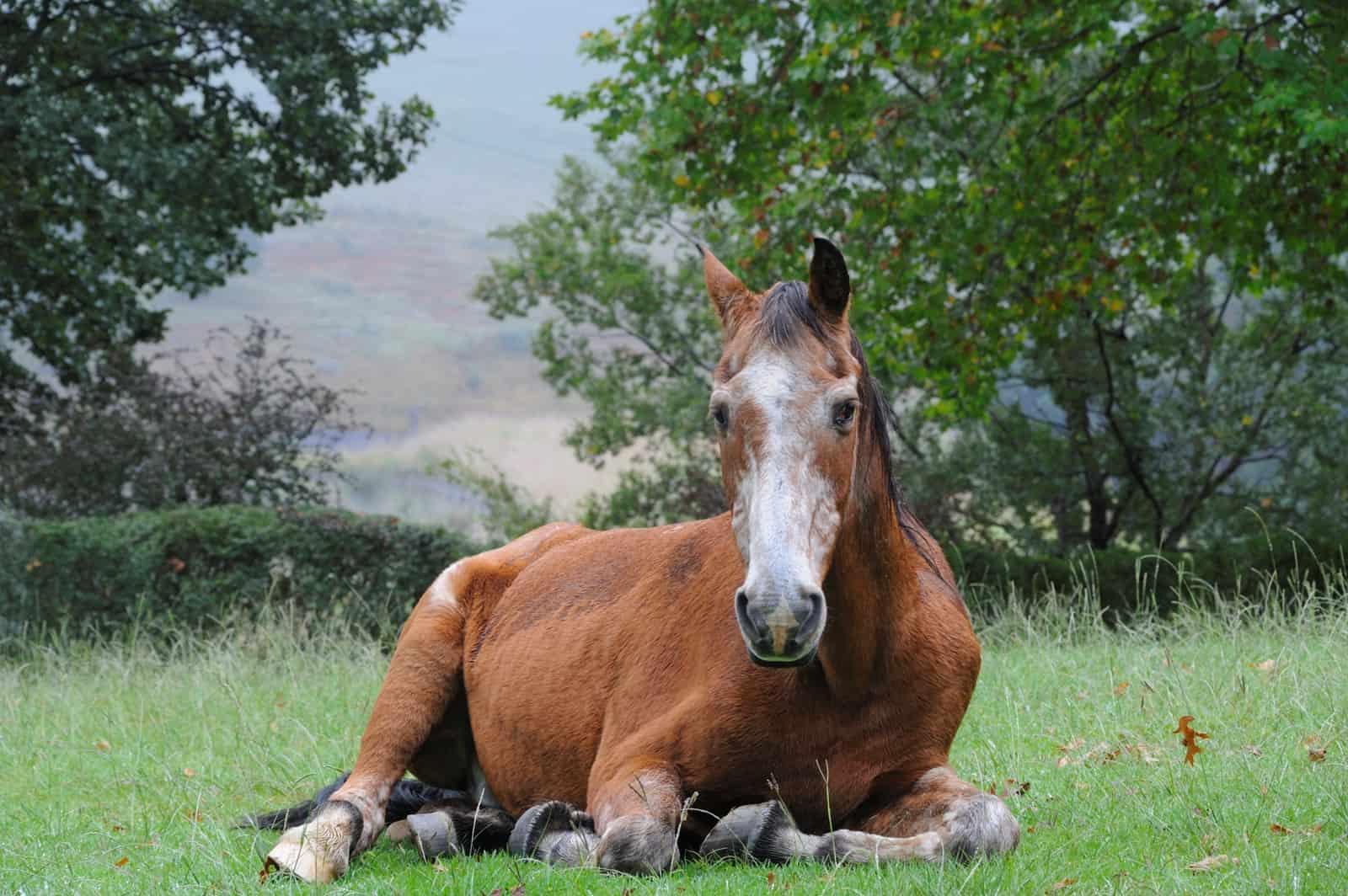
5. Extended Lying Down Time:

If your equine is showing poor body condition with a decrease in performance and spends most of its time lying down on the ground, it is not normal behavior. Ulcer in horses makes them feel tired quickly, and a horse seeks more rest.

3 Main Causes of Ulcers in Horses:

A horse owner should be familiar with many causes of ulcers in horses to prevent such diseases. Ulcer in a horse depends on a few following reasons.

1. Pattern and Frequency of Diet:

A healthy diet is essential for getting maximum performance from your equine and keeping it safe from many infections and ulcers. A horse needs to feed more frequently, so if you feed your horse infrequently, the amount of acid produced in the horse’s stomach will not be buffered, leading to an ulcer. Besides this, if you feed a horse with more grains, less saliva is produced, which will not be able to neutralize the volatile fatty acids. These fatty acids are the leading cause of the presence of ulcers in the stomach of a horse.

2. Dehydration:

Gastric fluids dilute with the help of constant access to water. So if your horse is not hydrated properly, it will cause an ulcer.

3. Stress and Excessive Exercise:

If your equine is living in a stressful environment, its feeding habits will be changed, leading to ulcers because stress leads to excessive blood flow to the stomach. Similarly, excessive exercise is another cause of ulcers in a horse’s stomach.

Treating Ulcers in Equine Naturally:

It is effortless to treat ulcers in horses naturally with the help of different herbs, natural supplements, and a supply of natural diet. A high-fiber diet is compulsory to cure ulcers in horses naturally, so it is better to add a natural diet to herbal medications for the best results. You can add mint, ginger, lemon balm, Aloe Vera, and fenugreek to your equine’s diet to treat the ulcers naturally.

Is aloe Vera good for a horse with stomach ulcers?

Aloe Vera is famous for its hundreds of benefits, and it is also capable of reducing the number of acids in the acid that is the leading cause of ulcers in horses. You can treat gastric ulcers naturally with Aloe Vera’s help to most horse owners. Wounds are healed quickly with the help of this herb, and it also relieves pain associated with ulcers.

Can ulcers in horses go away on their own?

If you expect ulcers in horses to go away on their own, then there are very few chances of it. Ulcers in the stomach can heal on their own, but it takes quite a long time. If your equine has no access to a stress-free environment with a good diet, then you cannot expect an ulcer to go on its own.

What is the best way to treat Ulcers in Horses?

Ulcer treatment is quite expensive, and different medications are available for it that you can give under the supervision of a vet. The best way is to go for natural treatment of ulcers with the help of different herbs if the ulcer is at the initial stage. The inclusion of natural supplements in the horse’s diet is also very important, so you should add Equinety Horse XL and Equinety Ultimate OEC, the two best products that can combine to supplement your horse. These two products will not help cure ulcers, but they will also keep your horse healthy naturally.

What is the fastest way to cure a stomach ulcer?

The fastest way to cure a stomach ulcer is by taking proper medication prescribed by the vet and adding natural supplements to the horse’s diet. A horse not feeding any supplement will take more time to cure stomach ulcers. Equinety Horse XL is a good product for your horse to boost its immunity, leading to quick recovery from ulcers.

Prevention is much more important than cure. So being a horse owner, you must be aware of the ways that are ideal for preventing ulcers in your horse. Our website has a comprehensive article available on this topic, so just read the prevention guide about equine ulcers. This prevention guide will help your equine remain healthy and away from any ulcers.

Related Guides for You:


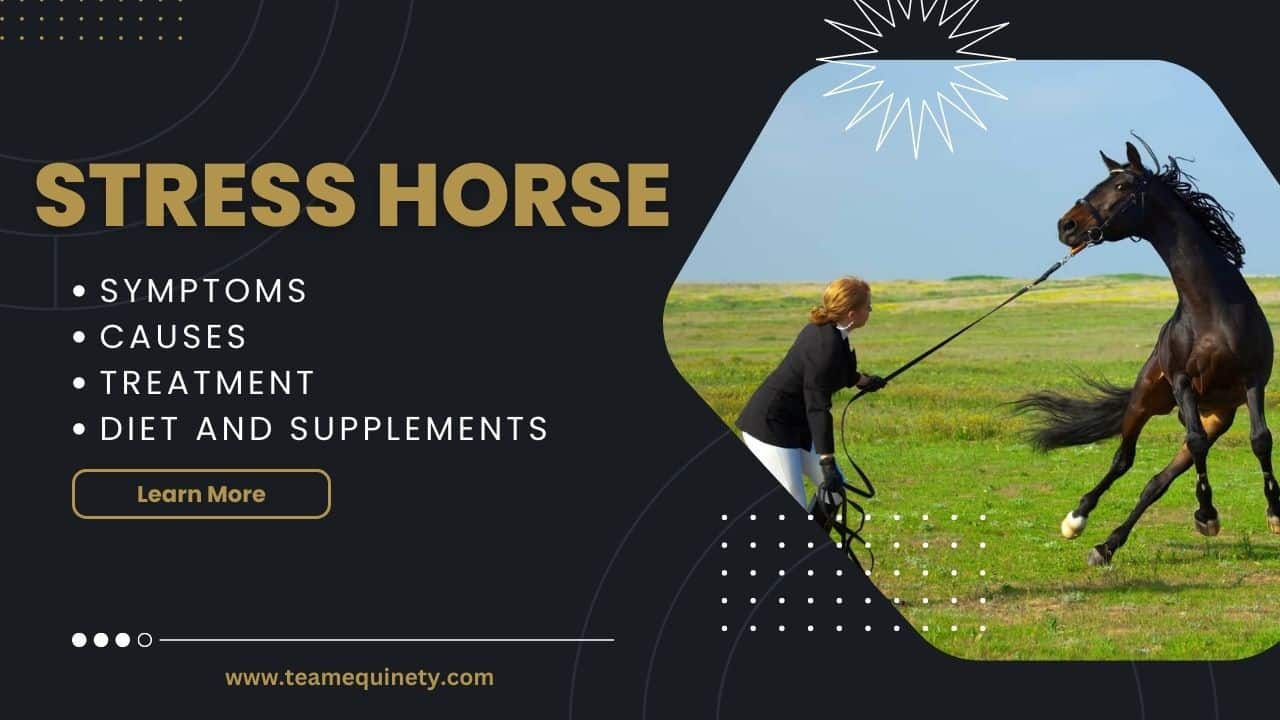
Stress in Horse: Symptoms, Causes, and Treatment

Like humans, horses also experience stress caused due to many social and environmental factors that should be addressed timely. Different horses experience different anxiety and stress levels expressed through their gestures, pastures, and interaction with other horses.

The horse has the most loyal and friendly nature and has had a strong relationship with humans since ancient times. If you also owe a horse, you must be aware of the horse’s nature.

If we talk about the common types of stress in horses, they are performance and separation stress. You can realize the actual condition of your horses by spending time with them. Understanding horse stress is essential because it will enable you to overcome this situation speedily and keep a strong relationship with your equine partner.
List of Symptoms of Stress and Anxiety in Horses:

Horses are capable of expressing their depression and anxiety with the help of a few signs and symptoms. You should be aware of these symptoms for quick solutions and treatment. Following are frequent signs that will help you find stress in your horse.

1. Heart rate:

The first and most obvious sign of stress and anxiety in a horse is increased heart rate. When you experience excessive heart rate in your equine, you should be careful about your horse’s anxiety level.

Due to enhanced heart rate, your horse will get tired frequently and will not take an interest in all normal activities. You should pay attention to this situation because, with time, it will be more difficult for you to get your horse back to normal condition.

2. Unresponsive:

A horse never shows strange behavior in human interaction. But if you experience unresponsive behavior, it may be a sign of stress. The increased stress level in horses leads to poor reactions, so you should tackle this situation quickly.

3. Behavioral Changes:

The most significant change that will help you diagnose the anxiety and stress level in the horse is behavioral change. Your horse will start reacting strangely and show reluctance to follow all instructions. The main reason behind these changes is not other than the stress that can be due to many reasons, so you just have to sort out the condition and then go for the best remedies.

4. Weak Immune System:

A horse’s immune system is vital in helping it to go through any adverse condition, but a higher stress level will weaken the immunity level in the horse. If your horse is catching more diseases fast, it may be a sign of a weak immunity level that can cause due to anxiety and stress.

Visual Signs of Stress in Horses:

Besides the stress mentioned above and anxiety in horses, a few other visual signs will help you assess horses’ stress levels. If you experience any of the signs below, it may be due to stress.

1. Weight Loss:

Weight loss is the primary and easily judged sign of stress in a horse. If your horse is not interested in eating enough due to decreased appetite, it will lead to weight loss. With proper care, a horse losing weight is the most significant sign of a high-stress level.

2. Sweating:

Sweating is not an uncommon thing in horses after any activity. But if your horse is experiencing excessive sweating without any challenging activity, then it may be a reason for a higher stress level. The immunity level of a horse is strong, and in normal conditions sweating is not noticed in horses.

Stressed Horse Body Language:

Though horses can’t speak, they can easily express their stress level with body language. It is not a big task to assess the actual level of anxiety and stress in horses with their body language so that you will experience the following things in your horse’s body language.

  • Excessive Chewing:

A horse can express its stress with the help of excessive chewing because the stressed mind of the horse will make it feel uncomfortable and adopt behavioral changes. If you notice excessive chewing in your horse, it can be due to anxiety.

  • Grinding Teeth:

Similarly, grinding teeth is another symptom of stressed horse body language. It is common among humans and horses that they both start grinding their teeth while going through stress.

Relaxed Horse Body Language:

It is easy to judge a relaxed horse because it will feel calm and happy. So following are a few signs of relaxed horse body language.

  • Even breath:

If your horse is breathing evenly from both sides, it shows simple body language. Your horse will feel relaxed, which will be expressed by its breath.

  • Soft Nostrils:

Soft nostrils of a horse are another symptom of a relaxed horse. If your horse is angry or feeling discomfort, its nostrils will stretch immediately.

  • Dropped Head:

A dropped head is another sign of happiness and relaxation in any horse. In this posture, your horse rests or sleeps with relaxed body language.

Stressed Horse Behavior:

If you are experiencing these changes in your horse, then it may be due to anxiety and stress in your horse.

  • Loss of consistency:

If your horse is experiencing any kind of stress, then it will start losing its consistency and be unable to perform routine tasks due to increased excretion.

  • Rapid and tense movement of the tail:

A stressed horse cannot express normal behavior. If you spot any rapid or tense tail swishing in your horse, it can be due to a higher anxiety level.

Treatment and Solutions to Calm a Stressed Horse?

Once you have judged the horse’s actual situation and stress level, it will be easier for you to go for the proper treatment and solution. The following are a few best remedies to help your horse eliminate stress.

  • Good Diet:

Maintaining a good diet will help your horse get rid of stress quickly. If you provide a balanced diet to your horse with plenty of clean water daily, it will be pretty easy for the horse to stay calm and reduce its anxiety level.

  • Follow Desired Schedule:

You must maintain a consistent daily schedule for your horse and follow it strictly because any change in feeding and exercise routine can add more stress to the horse. Following the desired schedule will get the best results for your stressed horse.

  • Calming supplements:

Feeding your horse with all the necessary supplements for better physical and mental health is essential. From teamequinety, you can get the best calming supplements for your horse that will boost the body language of your horse, and it will remain relaxed and calm.

Equinety Horse XL is the perfect supplement for the proper strength of horse muscles. It will also help get better focus with low-stress levels.

Helpful Guides for You:


Ulcer Prevention Supplements for Horses (2023)

Ulcers can affect a horse at any stage of life. So if you are a horse owner, you must be aware of this disease and its symptoms. Knowing ulcer is essential to overcome this disease, and it mostly happens to horses because their stomach is smaller than other species.

Due to the small stomach, we advise you to feed your horse with a small amount of food for extended periods. A horse’s stomach produces 9 gallons of acid per day, so if you are feeding your horse two times a day, then the horse’s stomach will not be able to neutralize the acid with feed. Besides, the high grain diet is also responsible for producing fatty acids that quickly lead to ulcers, so we can use an ulcer prevention supplement for horses even if we show no signs of ulcers.

In more ulcer cases, a horse does not show any signs. You can find the symptoms if your horse shows poor appetite, weight loss, dullness, change in attitude, or reluctance to exercise.

Treatment of ulcers is costly, so you should pay special attention to the diet plan of your Equine. The best way is to use the best supplement to avoid ulcers in horses.

Natural Supplements to Avoid Ulcer in Your Horse:

Natural supplements are best for improving equine health quality as they can enhance their digestive system to prevent ulcers. These supplements help your horse get stronger hooves, healthier coats, and skin.

If you are looking for the best natural supplement to avoid ulcers in your horse, you should go for Equinety Ultimate OEC. It is based on omega 3 and vitamin E to prevent gastric ulcers.

You can combine this product with Equinety Horse XL to make a solid supplement for your equine. It will help to fight different viral and bacterial infections in horses by improving their digestive system and preventing ulcers. Amino acids in these products will help your horse fulfill all its body requirements and build a robust recovery system by improving the immune system.

This natural supplement is also cost-effective, so you will get a complete supplement at a very reasonable price that will help you save expenses from ulcer treatment. Your Equine will get better focus with relief from stress and faster recovery.

5 Best Practices to Prevent Gastric or Stomach Ulcers in Horses:

Prevention is always better than treatment, so if you are an owner of a horse, then you should be aware of gastric or stomach ulcers by tracking your health. A few best practices will help you prevent ulcers in horses, some of which are below.

1. Frequent Feeding of Horses:

Diet frequency is essential to prevent gastric or stomach ulcers in horses. A horse grazes for up to 18 hours a day in a natural environment. So its stomach never remains empty; that is the main reason for preventing stomach ulcers. The feed will buffer acid in the stomach of horses, and it will also stimulate saliva production.

2. Avoid High Grain Diets:

High grains multiply the chances of ulcers due to many reasons. Eating grains involves less chewing, so a significant amount of saliva is not produced to buffer the acid. Secondly, grains rapidly pass through the horse’s stomach, leaving the stomach empty for a long time. Volatile fatty acids produce due to consuming grains by horses are also another source of ulcers.

3. Hydration:

Hydration is another essential factor in preventing ulcers in horses because constant access to water helps them dilute gastric fluids. It leads to a reduction of stomach acidity, which is ideal for preventing ulcers.

4. Stress-Free Environment:

Stress is another major contributing factor to ulcers in horses. So it is advised to provide a stress-free environment to your horse as a preventive measure. A stressful environment will increase thyroid hormones and cortisol levels, which may lead to gastric and stomach ulcers.

5. Inclusion of Natural Supplements in Diet:

Natural supplements are the best way to prevent gastric or stomach ulcers in horses. A good supplement like Equinety Horse XL and Equinety Ultimate OEC will help your horse get a robust immune and digestive system that will fight ulcers and other bacterial infections. So it is advised to include these two products in your horse’s nutrition and get the desired health level.

FAQs Answered Here about Ulcers in Horses:

Can horse ulcers heal on their own?

Less than 10% of horse ulcers heal on their own, so a horse owner needs to get proper treatment to prevent horses from the consequences of ulcers. Consult your horse VET immediately and follow the instructions with proper treatment.

Add a natural supplement like Equinety Horse XL and Equinety Ultimate OEC in the horse’s nutrition to overcome this situation with treatment because these supplements will improve the immune and digestion systems of the horse quickly.

How long do horse ulcers take to heal?

Most horse ulcers heal within four weeks of treatment, but you have to make a good diet plan for the horse in this duration by adding supplements so that they go for a speedy recovery.

Should you exercise a horse with ulcers?

If you follow a proper treatment plan for a horse having an ulcer, exercise will be helpful. It would be best if you reduced exercise intensity so that your horse can rest adequately and seek a speedy recovery. You must provide 2 days of complete rest to your horse in a week from exercise as it is more beneficial for them.

Can you ride on a horse with ulcers?

Ulcers in the horse will lead to more depression and stress. If your horse is facing this disease, you can still ride on it with proper care. The horse’s stomach should not be disturbed during the ride, and wait a few hours after the meal to ride on them.

Your horse will consume less food with ulcers, so long rides during this period will tire him more. Try to go for short rides during treatment and maintain a proper diet plan by adding natural supplements like Equinety Horse XL to boost stamina and reduce stress levels.

Helpful Guides for You:

Best Joint Support Supplements for Horses (2023)

Joint support supplements are necessary for horses as they improve their health and performance. These supplements provide additional support for the healthy functioning of joints by providing comfortable movement to horses.

If your horse is facing joint stiffness or pain, these supplements will not only relieve them but also improve the performance of your equine. An average horse weighs about 1000 pounds, and supplements are necessary to support its legs.
Vet-recommended Joint Support Supplements for Equine:

Equine veterinarians treat all injured horses and provide their services related to hoof care, vaccination, exercise, therapy, and nutrition. The vet also recommends the best joint support supplements for equine that are crucial for overcoming any joint disorder or providing maximum strength to the joints of horses.

In 2023 you can use the following two products for the best joint performance of your equine so take a look at them below.

Equinety Horse XL is a perfect product for your horse to get the best performance with the help of 100% pure amino acids. This product will enhance the performance of your equine with the help of cell regeneration and increase joint strength.

If your horse is facing joint stiffness or pain, Equinety Horse XL recommends veterinarians get relief from the pain and boost their joint health. This product is equally suitable for working or performance horses. So if your equine is facing focus issues or lacks stamina due to joint problems, then you can use this product.

Equinety Ultimate OEC is a potent antioxidant that will help fight many bacterial diseases in horses, causing joint disorders. The VET recommends combining Equinety Horse XL and Equinety Ultimate OEC to make a perfect supplement for the horse.

VET recommends Equinety Ultimate OEC for supporting joint health, coats, and the healthier skin of horses. It also works as a supplement by boosting the immune system of equine as it contains colloidal silver, natural vitamin E, and Omega 3 oil in it.

Most Effective Joint Support Supplements for Older and Senior Horses:

Joint problems are more common in older and senior horses, so add joint support supplements to their nutrition. There are different ways of supporting your senior horse’s joints, so follow below mentioned ways to get the best performance from older horses and provide maximum support to their joints.

  • Routine Vet Checkup:

A vet checkup is necessary to monitor senior horses’ organ function and joint health. These are common problems that a senior horse has to face. Your vet will regularly check your equine and recommend the best joint supplement.

  • Joint Support Supplements:

There are hundreds of supplements available in the market. If you are looking for a joint support supplement for your senior or older horse, you must be careful while choosing the best one.

Equinety Horse XL and Equinety Ultimate OEC are the two best products for the joint support of equine; that is why VET supports them. These two products come at affordable prices and can provide desired health to the joints of senior horses. If your horse is facing muscle issues, combining these two products will provide maximum support to the organs of senior or older horses.

Natural joint supplement for horses with arthritis:

Arthritis is a widespread disease in horses responsible for causing inflammation and pain. Most senior horses face this degenerative joint disease that results in swelling of joints, uneven gait, and stiffness. You should diagnose this disease early; otherwise, it will worsen, and your horse will have to bear much pain.

There are many natural joint support supplements available for horses with arthritis. So if you want the best supplement, you should use Equinety Ultimate OEC and Equniety Horse XL. These two products best provide maximum support to the joints of your equine, especially if they are senior. You can combine these two products to make a natural supplement for dealing with arthritis because they provide the body with what it needs.

Frequency-Asked Questions about Equine Joint Support:

1. For Joint Support, what is more effective? Injections, Tablets, Liquids, or Supplements?

Many horse owners need clarification when choosing the best joint support product. They cannot compare the effectiveness of different products like injections, tablets, liquids, and supplements.

Joint diseases are common in horses, and if you are also facing the same situation for your horse, you should consult a vet to choose the best solution. If we compare the advantages and disadvantages of injections, tablets, liquids, and supplements for the joint support of horses, then supplements are the best choice.

With the help of a joint support supplement, your equine will not be able to overcome joint issues, but they will also improve the overall health of the horse. Injections and tablets will only provide quick but temporary relief to the horse, so we don’t recommend them.

2. Are joint supplements worth it for horses?

It is another most asked question by the owner of horses, so the simple answer to this question is a big yes. Joint supplements are ideal for performance and working horses because they help them feel best. Joint pain can reduce the performance of horses, and their quality of life is also compromised.

Using the best joint support supplement like Equinety Horse XL and Equinety Ultimate OEC will relieve joints and maintain equine joint health. Your horse will get rid of joint pain and stiffness, and its overall performance will also improve.

3. When Does My Horse Need a Joint Supplement?

Using a joint supplement after showing signs of pain by your horse is not an intelligent technique. It will bring more complications, so your horse starts using joint supplements before the appearance of these signs.

Using joint supplements before the problem arises will help prevent their degeneration, but you can also start them after showing signs of joint pains. A natural joint supplement like Equine Horse XL will help your horse in getting relief from any kind of joint pain and stiffness.

Useful Guides for You:

Best Muscle Recovery Natural Supplements for Horses (2023)

Horses are specially trained to cover long distances and participate in different exercises. But at the same time, these activities cause muscle fatigue. Muscle disorders are common in horses due to many reasons. These reasons include diseases and infections that badly affect horses’ daily routines. Besides them, vitamin E deficiency is also responsible for lousy muscle health, which can cause sudden death in horses.

If your Equine is also facing muscle disorders, you need to know the best muscle recovery supplements for horses to boost their muscle growth. Horse muscle supplements help horses to boost their performance and get instant muscle recovery. They also help in getting muscle mass and growth.
What helps fast muscle recovery in horses?
Protein plays a vital role in the fast muscle recovery of horses because it can rebuild damaged muscles. Protein assists the repair and growth of tissues, so use supplements that includes electrolytes, vitamin E, and amino acids.

The best supplement for the muscle recovery of horses in 2023 is Equinety Horse XL because it contains amino acids ideal for cellular repair. It has 8 amino acids that will help your equine recover the fastest muscle and regenerate cells for healthier muscles. You can add this product to feed your horse and get desired results within days.

Equinety Horse XL will also help your horse get rid of fatigue due to excessive exercise and distance traveled so that your equine will get the proper quantity of amino acids in its diet.

The main drawback of muscle recovery supplements is their side effects. After using this product, you will not experience any of them as it does not contain sugar, soy, starches, or fillers. You will get 100 days supply that will help your Equine to fast muscle recovery and sufficient mass growth.

How long do horses need to recover?

Each horse’s recovery time is different based on muscle fatigue, the condition of the horse, and exercise level. A horse can fully recover within 24 to 48 hours if it is not facing any swear conditions. In many conditions, the horses require up to 5 days to recover their muscles.

The diagnosis process is also essential in determining the recovery time for the equine. So if your horse is facing any muscle injury, you should consult a vet before and start the treatment of the injury.

Recovery of muscles after injury requires more time. So you can expect up to 3 weeks for complete recovery. Massage and stretching of muscles are also helpful for recovery during these 3 weeks.

Nutrition to Help Fastest Muscles Recovery in Equine

Nutrition plays a vital role in the fastest muscle recovery in equine. So for choosing the best nutrition, keeps these points in your mind.

1. Proteins:

Protein plays a vital role in repairing tissues and building muscles. So while deciding the nutrition, go for protein-rich foods for the fastest muscle recovery for your horse.

After an injury, your equine will experience muscle mass and strength reduction. But including sufficient protein in nutrition will help keep the loss at a minimum level. It will also help quick recovery, and increased protein intake will quickly rebuild any lost muscle.

The inclusion of protein in the diet of equine will also help muscles to recover faster during sleep and exercise for recovery as well.

2. Vitamin E and Fats:

Vitamin E is an essential element of the nutrition of equine for the fastest recovery of muscles as it works as an antioxidant. It will also help a horse to keep free from stress caused by muscle fatigue and injuries.

Fats are also the most significant energy source that will build muscle strength and growth quickly. If you are providing a sufficient amount of fats in your diet, then your equine will be able to recover from any muscle injury fully.

3. Zinc:

Zinc is an essential source of regeneration of muscles because it supports many proteins and enzymes in the horse’s diet. It is involved in the production and functioning of muscles, especially in the recovery process. So if your horse is facing any muscle disorder, then it is advised to add zinc to the diet for better and quicker recovery.

4. Magnesium:

Higher magnesium intake is associated with bone strength and firmness, so for the fastest muscle recovery, add this mineral to the equine diet. It will also help repair and maintain joints that are too important after getting an injury or muscle disorder in the horse.

5. Water intake:

Proper hydration is one of the essential elements for the fastest recovery of muscles in horses. A hydrated horse’s body will help nutrition reach the desired place for the healing and recovery process. It also promotes proper blood circulation in the body. Dehydration will cause more fatigue in your equine, resulting in more muscle fatigue and slowing down the recovery process.

Best Ways to Improve Horse Performance After Recovery:

It is not easy to improve the horse’s performance after muscle recovery because the horse’s fitness level has significantly dropped due to extended breaks. You should follow these points to improve the horse’s performance after recovery.

  • Make a proper exercise timetable for your equine and follow it strictly. Start with a minimum duration to make exercise convenient for the horse, then increase the duration.
  • Cool down your horse correctly after exercising daily. It will help the body of the equine from overheating. A 5 to 10 minutes walk will help to cool your equine.
  • Proper hydration and nutrition are necessary to improve the horse’s performance after recovery. It will help him get back to the previous routine quickly.
  • A post-workout massage is another way of improving the horse’s performance after muscle recovery. It will help in relaxing the muscles and reducing any kind of pain or swelling.

Including the right supplement like Equinety Horse XL will help your Equine regain its performance after recovery because amino acid is necessary for the equine at this stage. It will also help your horse to overcome any fatigue caused by exercise after recovery.

Helpful Posts for You:

7 Visual Symptoms of Horse Dying of Old Age

If we talk about a horse’s life span, a horse usually lives for 25 to 30 years. With the help of proper care and diet, a horse can live into its 30s. Different horse breeds have different ages so if we talk about the longest-living horsing breed, then American paint horses, Haflinger, Thoroughbred, Appaloosa, Arabian, and Quarter horses are those breeds that have a greater life span.

With enhanced dental and veterinary care, most horses are reaching their old age, so after a significant time, horses are experiencing aging symptoms. Generally, after 15 years, aging symptoms start appearing in horses, but few long-life slices of bread experience such changes in their twenties.

Horses start going through various mental and physical changes during Aging. You can judge many of these changes easily through visual symptoms.

List of Signs of Old Horse Dying due to Aging:

If you owe many senior horses, you may have experienced many signs of old horses dying due to Aging. But on the other hand, if you have yet to experience it or don’t know about it, you will get a list of such signs here, so take a look below.

1. Long Injuries:

If your horse is experiencing long injuries and is unable to recover from those injuries, then it is a clear sign that it will die due to Aging. After attaining old age, the horse’s body lacks energy, making it difficult to boost its immunity. It is a sign that your horse is closer to the end of its life.

2. Blur Visions:

Diminished eyesight is another common issue in aged horses leading to blurred vision. If your horse cannot recognize and distinguish among things and its ability is decreasing daily, then it is another sign of dying due to Aging.

3. Muscle Mass reduction:

Muscle mass plays a vital role in the strength of a horse, and it provides maximum energy, but after reaching the age of 15 years, many horses start experiencing loss of muscle mass. If your horse breed is extended living, you will experience such mass reduction after 20 to 25 years of age.

4. No Interest in Food:

If a horse is not taking an interest in eating food or showing poor appetite, then it does not mean that your horse will die soon. Lack of interest in eating can be due to many reasons, but if your horse is senior and shows a prolonged lack of interest in food, it may indicate that you may expect the end of the horse soon.

5. Unable to stand for a long time:

A horse that is facing difficulty standing up and even trying to stand up frequently but after a short time it lies down then it is another symptom of the death of horse due to Aging. In older horses, the muscle power becomes too weak. Due to this reason, they can only stand up for a short time even if they want to do it.

6. Digestion Issues:

A horse’s digestive system is its whole strength. With time, it starts facing different issues, especially after reaching the age of 15 years. It would not be wrong if we say that digestion issues are one of the biggest reasons for the death of horses because of Aging.

7. Weight loss:

An ordinarily healthy horse does not face rapid changes in weight because it remains stable. The weight of a horse will never increase or decrease rapidly. So if your horse is facing such loss and it is older, then be ready for death because of Aging. It is one of the common symptoms in many horses that may be due to illness or a weak immune system.

Do horses know when they are going to die?

Well, it is debatable, so we say that a horse is a brilliant animal, but it is impossible for a horse to know precisely about its death. Due to the aging factor, many horses start showing strange behavior like stopping eating, lying down most of the time, and experiencing a few other changes like grey hair and a rough coat. Still, not a single behavior can tell that the horse is familiar about its soon death. All of this behavior is common due to illness and aging factors, so you may say that horses may experience strange changes but don’t know when they will die.

How to comfort a senior dying horse?

it is not easy to realize that your favorite partner will die soon, but after knowing this fact, you should try to make your horse’s remaining days of life comfortable. There are many ways to comfort a senior dying horse with their help.

  • Spend Time with Horse:

A horse always values the company of its owner, so you should try to spend maximum time with it. Your horse may experience diminished eyesight and can’t recognize you after seeing, but it will surely recognize your voice, so show your care with your voice. It will make the horse much more comfortable and happy at the end of its life.

  • Take the horse for a walk:

A horse loves to walk with its partner; even in the last moments of life, it will prefer to go for a walk. So if your horse has enough energy, do some walking and exercise. It will help the body of the horse in blood circulation.

  • Proper Medication:

You are responsible for not leaving the horse at the end of its life. So proper medication will help your horse to spend its last days peacefully. Consult your vet for pain medication, as your horse can get maximum rest with the help of medicine.

  • Don’tForce to Eat:

Sadly, your horse will not be able to eat and digest enough diet at the dying age, so it is recommended not to force your horse to eat. The horse will lose weight, but forcing it to eat something will also bring stress.

  • Do Familiar Things:

Try to do all those things your horse is familiar with to comfort a dying horse. Your horse may not experience things in the desired manner, but still, it will provide maximum comfort to it.

How long can a horse lay down before dying?

There is no exact time that a horse will lay down before dying because the exact time varies in all horses. If we talk about average duration, it will lay down up to 3 hours before dying.

Related Guides for You:

The Role of Horse Supplements in the Diet of Pregnant Mares

Horse Supplements and Pregnant Mares

Horse supplements for the first horse I purchased wasn’t something that was on my mind… I bought my first horse when I was taking horsemanship classes in college and I rented a small stall in the university barn. My little mare was white with blue eyes and she was just under 15 hands. She gained weight very easily and my barn friends thought it was because she was short and stocky. After a couple of months, I worried that she was going to become overweight even though I was riding her in all my classes plus hours every day for fun.

I called an equine vet for the first time and he came out for a checkup. He was in the middle of a checkup and he was listening to her gut when he gave me an odd look. I was pretty worried. He told me not to worry. I had no clue what was happening. He laughed and told me that she was due to foal sometime in the next two months. I had no clue! My horse vet said that since I didn’t know until late, I hadn’t been able to guarantee earlier nutrition, so I should be careful to use good horse supplements and particularly protein and an equine amino acid supplement. Horse supplements can be critical to mare and foal health. Equinety is a safe supplement for mares and foals.

Proper feeding of pregnant mares is vital to the proper growth and development of the foal. The gestation length in the horse is approx. 11 months, with most of the fetal growth occurring in that last trimester, or the last 3-4 months. Because of this, the nutritional requirements of the mare, especially energy and protein requirements, vary from one end of gestation to the other. As the foal grows during the last 90 days of gestation, an extra strain will be placed on her body.

During the last portion of gestation as the foal is growing rapidly, the mare will usually eat less, as abdominal space usually occupied by the stomach is crowded out by the foal. It is at this time that additional supplementation is really needed to provide the protein, amino acids, and minerals that the mare needs to support the foal’s growth. Protein is a component of cells throughout the body, and vital to growing the muscles that will allow the newborn foal to stand on those spindly legs.

Allowing mares access to a salt lick during late gestation is important, so the proper amounts of salt can be provided to the foal. Salt is composed of sodium ions and chloride ions, which play an important role in electrical impulse conduction in the body, such as in the central nervous system. A deficiency of salt can lead, counterintuitively, to decreased water intake and a decrease to the cessation of eating. This may seem backward, because if I eat something salty, it makes me want to drink more, but decreased sodium in the nervous system leads to mental dullness, decreasing response to the body’s hydration regulation. As newborn foals have few energy reserves within the body, being mentally alert and having a good appetite is important to their overall health.

Being aware of your mare’s stage of gestation and adjusting nutrition appropriately will provide the best possible start for your foal’s life, so it can scamper across the pasture as it strengthens muscles and builds coordination

Never Say Never

American Paint Horse Association Chief Marketing Officer Steven Hayes has built his career in the Western industry by always saying yes to new opportunities.

Steven Hayes may have graduated Tarleton State University with a degree in animal science, but you wouldn’t know it by looking at his résumé. From his job at a regional feed company to his current role as Chief Marketing Officer at the American Paint Horse Association, the Comanche, Texas, native is a long way away from the career he thought he would have in pharmaceutical sales. Along the way, he says he’s learned a lesson of paramount importance — never say never.

Steven and Shantell Hayes. 


Equinety: How did you become involved in the Western industry?

SH: I grew up in a ranching family. We had a cow-calf operation and raised cutting horses. Our ranch wasn’t big enough to support another family, so I knew I would have to pursue a career doing something else. I got a rodeo scholarship to Odessa College in Odessa, Texas, and then moved to Tarleton State University in Stephenville, Texas, to finish my degree in animal science. Like most kids who are just graduating college, I had no idea what I wanted to do with my life.  I thought I might go into pharmaceutical sales. 


Equinety: Tell us about the journey that led you to your current role at APHA.

SH: Well, I never did end up in pharmaceutical sales. My first job out of college was working for a local feed company. I spent about a year there before getting a call from the United States Team Roping Championships. They were looking for someone to work in classifications and event management, and that was a wonderful but challenging role. I loved the data-driven side of things but talking to the team ropers and telling them they were moving up or down in the numbers could be tough. It was great for me as a young person in my career to go through that. 

I spent three years there before receiving a call from the National Cutting Horse Association. They had an opening in their marketing department, so I moved there and began working as Director of Marketing Operations. I did a little bit of everything at NCHA — I think I wore a little bit of every hat at one time or another. 

Three years later, I transitioned to working at APHA as Chief Marketing Officer. They were looking for someone to bring some creative ideas and growth opportunities to new projects at APHA, including its new for-profit subsidiary, Marked for Greatness Properties. It has been an interesting journey. I’m open to anything — I like to try different things — and I’ve really built my career around that mindset.


2022 APHA World Show – Shine Mega Shine and Steve Meadows were stars in the Ranch Rail Pleasure Sweepstakes at #PaintWorld, scoring a payout worth more than $1,000 and the championship. APHA File photo


Equinety: What do you love most about your work?

SH:  I love the people. Our industry feels big — it has lots of tentacles — but at the end of the day, it’s actually pretty small. The people who work in this industry are different than those you’ll find in corporate America. I grew up living the Western lifestyle and being able to hold true to my core values and my identity within the places I work at is important to me. The cowboy code is lived in this industry — you can trust who you work with, and I have forged great relationships through sponsorships, partnerships and events. 


Equinety: What is your best advice for someone who wants to pursue a career in the Western industry?

SH: Never let an opportunity pass you by. I’m in marketing and business, but I have an animal science degree. I’ve gotten where I am today because opportunities presented themselves and I said yes, even if I had no idea what I was doing. I knew I could work hard and figure it out. 

Second, be open minded. A lot of people have a plan for their life. They say they’ll never work in retail or sales, or whatever it may be, but that limits a person. Be willing to try. The biggest thing in the Western industry is getting your foot in the door, no matter where that door is. You never know what it may be holding open. 


Equinety: What made you want to try Equinety?

SH: So many products on the market are designed to help with one specific area — mane and tail, hoof health, joints — I liked the idea that Equinety would let us streamline our supplements so we wouldn’t have to feed 10 of them. It really lets us pare things down while still making sure the horses get everything they need.


Equinety: You’ve only had your horses on Equinety for 30 days. Have you noticed any changes?

SH: We can already see a difference in their overall appearance. Their coats are healthier and shinier. I know we haven’t been using the product for very long, but that’s something we noticed almost right away.


Note: The American Paint Horse Association and Marked for Greatness Properties invites interested parties to attend the Red Steagall Cowboy Gathering, from October 28—30, 2022 and the Cowgirl Gathering, from November 11—13, 2022. Contact APHA for complete information, or visit cowgirlgathering.com

Head Over Heels

World champion team roper Patrick Smith shares his unorthodox path to a lifelong love affair with roping and the lessons he’s learned along the way.
Andersen CbarC Photo

Equinety: Unlike many professional rodeo athletes, you did not grow up in the Western industry. How did you get your start in team roping?

PS: I grew up in Midland, Texas, but I lived in town. I was just like every kid there—I wanted to ride horses! Unfortunately, I didn’t know anything about riding, roping or rodeo. I was attending a private school that was too small to offer any sports teams when Stan and Lorilee McNerlin relocated from California and started offering riding lessons. They were team ropers, and when I saw them roping, I knew I wanted to learn. Stan and Lorilee are two of the greatest people to ever walk the planet. They started helping me, and I just fell in love. I was in love with roping before I ever knew I could rope for a living or make a career out of rodeo. The rest is history.


Equinety: What made you decide to pursue professional rodeo as a career?

PS: From the moment I started, I loved horses, swinging a rope, and having something to work at. As I got a little better, I started going to some ropings and jackpots. Once I won my first dollar, I was hooked. They say, ‘A dollar won is better than a dollar earned.’  And my dad has always said once you realize you can win money doing something like that, you’ll do just about anything in the world to make sure that’s how you’re making a living. 

TRJ Source File

Equinety: What do you love most about team roping?

PS: Honestly, I think it’s a little bit of everything combined. I’m a competitive person, so I love that aspect of it. But I also love the Western industry as a whole, and I’m grateful my kids are growing up in it. There are so many opportunities to learn the importance of responsibility, especially when you transition from just owning a horse to owning a competitive athlete—keeping them sound and firing on all cylinders takes a lot of commitment.


Equinety: What is the best piece of advice you’ve ever received?

PS: I roped with one of my best friends on the planet, Trevor Brazile, for more than a dozen years. When I first started roping with him, he told me the only way to get better was to get a shorter memory. You have to develop the ability to walk out of the arena after you’ve dropped the ball and not let that failure defeat you the next time you try to compete. That applies to so many things in life. The thrill of victory sticks with you, but the sting of loss is so much more powerful. It will take you down if you let it. You have to learn to be mentally resilient.


Equinety: What advice would you share with someone who thinks they want to pursue a career in professional rodeo?

PS: Don’t listen to the noise of everyone else—don’t worry about what they’re saying or thinking. I have a 14-year-old daughter, an 11-year-old daughter, and a 9-year-old son. My eldest is taking an interest in breakaway, but right out of the gate she started feeling defeated because there are kids who have been swinging a rope since they were 3 years old. You think you’ll never catch up, but I was 17 when I started. I didn’t junior, high school or college rodeo—I went straight to the PRCA. I surrounded myself with people every day who were better. Just because you’re not there today doesn’t mean you can’t be there tomorrow. You get out of it what you put into it. 


Equinety: Rodeo is full of peaks and valleys. How do you push through the hard times?

PS: First and foremost, I am a faithful man. I believe in God. I don’t believe in praying to win—if I could do that, I would have picked the lottery instead of rodeo—but I do believe God can direct my path. As long as I do my part and prepare, I can count on God to help me with the rest.

Patrick Smith aboard his stallion WSR HESA DUNOFA LENA aka “Rooster”
XFactor Roping source file

Equinety: You feel strongly about making sure your equine athletes have the best possible care. Why did you start using Equinety?

PS:  I was introduced to Equinety in 2019 by Tyler Wade. My horses had several soft tissue injuries, so I reached out to try the product. I had never really been a huge supplement guy, but I honestly saw a significant difference in my horses’ recovery time and overall look and feel. I also have an 18-year-old stud horse, and we collect him every year. His count is higher than it’s ever been since we started him on Equinety. I won’t put my name on a product if I don’t think it works, but I enjoy telling people about Equinety because I know if you use it, you will see a difference in your horses. 


Equinety: What would you say to someone who has never used Equinety?

PS: Try it! There are so many gimmicks, but this isn’t one of them. I’ve been rodeoing professionally for a long time. I have some of the best horses I’ve ever had, and Equinety is one thing I make sure I pack in my rig. I’ve learned if we don’t take care of our horses, it’s really hard for them to continue to take care of us. 

From the Ground Up

Bill Myers of Myers Performance Horses shares his journey, his wisdom and his best industry advice.
Frenchmans Guy and Myers Family Photo 2000 Larry Larson Photography

It’s nearly impossible to talk about the performance horse industry without mentioning legendary sire Frenchmans Guy. From barrel horses to rope horses, and from elite professional athletes to trusty youth mounts, the influence of Frenchmans Guy has been profound. Likewise, his owners Bill and Deb Myers of Myers Performance Horses have carved out a name for themselves breeding an annual crop of standout performance horse hopefuls and boasting a 2-year-old sale program that showcases some of the top prospects in the industry. Bill and Deb recently started using Equinety products and say they love the extra edge it’s giving both their breeding and performance horses.

Equinety: How long have you been in the performance horse industry?
BM: I grew up on a ranch riding every day. We did a lot of work horseback and I learned to appreciate good horses. My family was also involved in rodeo, so I started rodeoing as a kid and kept pursuing that as I got older. As I went along in life, I realized I wanted to make a career in the horse industry. Horses have always been a part of who I am. 

Equinety: How did you get your professional start in the industry?
BM: I got married right out of high school. My wife and I put our program together over time, and with a very limited number of resources. We started out training horses for the public and for years, we trained a lot of outside horses. We were really blessed to learn about the family of Frenchmans Guy—we owned brothers and sisters before we owned him—and that really changed things for us. He kicked our program to the next level. 

Equinety: How did Frenchmans Guy help your program evolve?
BM: He became the backbone of our business. We had always trained for the public, but as we got into raising our own horses, we were able to train our own colts. Because we had that strong foundation in training, we were able to develop a strong program to market and sell our 2-year-olds. That was a big turning point in our program—transitioning to making a living on the horses we bred, raised and trained ourselves.

Bill aboard the late A Smooth Guy, Frenchmans Guy x Docs Movida (Dry Doc) Larry Larson Photo

Equinety: You owned Frenchmans Guy for the entirety of his breeding career. What is it like to see the impact he has had, and is continuing to have, on the performance horse industry?
BM: It’s amazing. It’s really incredible when you open a sale program and see so many horses that are still own sons or daughters of Frenchmans Guy, or who are by sons or out of daughters. We are seeing his name three generations back now. He lived a long time, so he was able to have a tremendous influence on the industry.

Equinety: What is your favorite thing about working in this industry?
BM: For us, it’s about raising extremely talented athletes and then watching them excel in their careers. We love keeping up with the horses we’ve produced and there’s a lot of satisfaction in seeing them win. We also love raising horses of this quality because they are capable of competing at the highest level, but they also shine as youth mounts. People at every level can ride them, and that’s really rewarding. 

Equienty: What is your advice for someone who thinks they want to pursue a career in breeding or training performance horses?
BM: I say this to a lot of kids—it’s more important to go to work and enjoy your job than it is to go to a job you don’t like just for the money.  If you like your work, you’re making a living and enjoying life. That’s one of the great things about our industry. I’ve never seen growth like I’m seeing right now and I think there are huge opportunities. If you work hard, there is no limit to where you can go. I also like to remind people you don’t have to be a millionaire to start out—you can start with nothing. If you’re not scared to work, there is no ceiling.
Patience is also extremely important because establishing a program and finding success in this industry is not an overnight deal. You need to have the foresight to think ahead, see what comes down the road and be willing to make sacrifices to get there. 

Bill & Lucky Wonder Horse 2015 Stallion, First Down Dash x Rosas Cantina Cc (Corona Cartel)
TS Photo

Equinety: What is the best piece of advice you have received? 
BM: I have learned from so many people I’d hate to even try to say. I learned a little bit and got help from a lot of different directions as I went along. My wife has been the biggest inspiration as far as pushing me and encouraging me. In our younger years when it was hard just trying to make a living, having her by my side, working hard with me every day and helping me reach some of those goals was especially important.  

Equinety: When did you start using Equinety? 
BM: We started using Equinety Horse XL and Ultimate OEC in February of 2022. At the time, I told [Equinety president] John Dowdy I’m a big believer if I see results, but I won’t endorse something if I don’t see results myself—well, we’ve seen the results in many ways. 

Equinety: In what ways have you notice Equinety giving your horses an extra edge?
BM: Our son collects our studs and we had one stud in particular that we noticed had a very high conception rate. We were also impressed with the semen quality and motility. Outside of breeding, we’ve been giving the products to our performance and sale horses. Our rope horses don’t get sore as easily. Overall, the horses’ hair coats, health and body condition are great. We are amazed—we love the way they look when they’re on Equinety.

Equinety: What would you say to someone who has never used Equinety?
BM: Try it! To me, that’s the best way to see how well it works.

Bill & Deb Myers